
In an era where digital transformation is a necessity rather than a luxury, businesses are increasingly adopting tools that promise to streamline operations and reduce costs. Among these tools, digital signature solutions have gained immense popularity. They offer a convenient way to sign contracts, approve documents, and facilitate transactions remotely. However, the allure of free digital signature tools can come with hidden risks that businesses cannot afford to ignore. These tools, while seemingly cost-effective, often jeopardize data security, regulatory compliance, and operational efficiency.
For businesses—especially small and medium-sized enterprises (SMBs)—understanding the implications of choosing free digital signature tools is crucial. From data privacy concerns to hidden costs and security vulnerabilities, these risks can have far-reaching consequences. In this comprehensive guide, we’ll explore why relying on free digital signature tools can be detrimental to your business and why investing in a secure, robust solution is a smarter, long-term choice.
1. The Data Privacy Risks of Free Digital Signature Tools
Free digital signature tools often come with an unspoken trade-off: your data. Many of these tools generate revenue not by charging users directly but by monetizing their data. This can include selling user information to third parties or using metadata from your documents for advertising purposes. While this business model may seem harmless at first glance, it poses significant risks for businesses handling sensitive information.

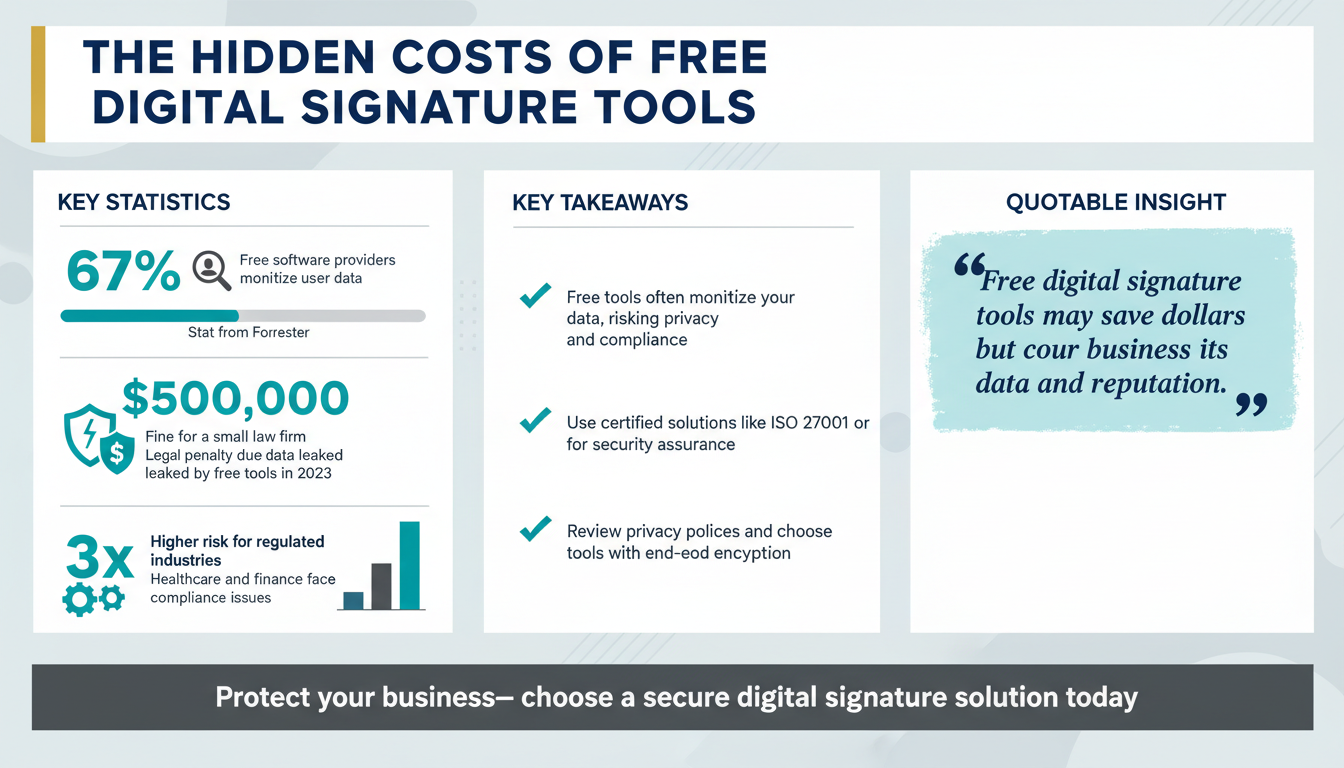
According to a 2025 report by Forrester, 67% of free software providers rely on data monetization as a primary revenue stream. This means that when you use a free digital signature tool, your signed documents—along with metadata like names, email addresses, and IP addresses—could be analyzed, shared, or even sold to advertisers. For businesses operating in regulated industries, such as healthcare or finance, this can lead to legal and reputational risks.
For example, imagine a scenario where your company uses a free tool to finalize a sensitive client contract. Unbeknownst to you, the tool collects metadata from the document and shares it with third-party advertisers. If this information is leaked or misused, your business could face lawsuits or fines for violating data protection laws like the General Data Protection Regulation (GDPR) or the California Consumer Privacy Act (CCPA).
Real-World Consequences of Data Breaches
Data breaches caused by insecure tools can lead to severe consequences. In 2023, a small law firm in the Midwest faced a $500,000 fine after confidential client data was leaked through a free digital signature tool. This case not only impacted the firm financially but also damaged its reputation, leading many clients to switch to competitors. Such scenarios illustrate why free tools with inadequate data protection measures are not worth the risk.
What to Look for in a Secure Solution
To ensure data privacy, businesses should prioritize digital signature solutions that are independently audited and certified for compliance with industry standards. Look for certifications such as ISO 27001, SOC 2, or GDPR compliance. These certifications provide assurance that the platform has robust data protection measures in place.
Practical Tips:
- Review the privacy policy of any digital signature tool you consider using. Ensure it explicitly states how your data will be handled.
- Choose tools that offer end-to-end encryption to protect your documents from unauthorized access.
- Consult legal or IT experts to ensure the tool complies with data protection regulations applicable to your industry.
2. Hidden Costs That Undermine the “Free” Promise
The phrase “you get what you pay for” is particularly relevant when evaluating free digital signature tools. While these tools may appear cost-effective initially, they often come with limitations that hinder scalability and productivity. Features like bulk signing, advanced authentication, and seamless integrations are typically locked behind paywalls. As your business grows and your needs evolve, these hidden costs can quickly escalate.

For instance, many free tools impose restrictions on the number of documents you can sign per month. Others limit the number of users or the types of files you can upload. To unlock these essential features, you’ll need to upgrade to a premium plan. According to a 2024 HubSpot study, 54% of businesses using free software reported incurring unexpected costs related to add-ons and upgrades. These costs often exceed the price of adopting a secure, all-in-one solution from the start.
Beyond Monetary Costs
Hidden costs aren’t always financial. Operational inefficiencies caused by these limitations can lead to indirect costs. For example, if your team spends hours troubleshooting integration issues or manually transferring data between systems, this wasted time translates into lost productivity. Over time, these inefficiencies can erode your bottom line. A sales team may miss out on critical deals due to delays in contract approvals, or an HR department might struggle to onboard employees efficiently without adequate document signing capabilities.
Investing for Long-Term Savings
Investing in a comprehensive digital signature solution eliminates these concerns. Many paid platforms offer transparent pricing models, unlimited document signing, and advanced features as part of their standard package. This ensures long-term value and predictable costs. For example, platforms like DocuSign or Adobe Sign provide detailed cost breakdowns, allowing businesses to budget effectively while gaining access to premium features like workflow automation and team collaboration tools.
Practical Tips:
- Calculate the total cost of ownership for free tools by factoring in upgrade fees, productivity losses, and integration challenges.
- Choose a solution with a transparent pricing structure and no hidden fees.
- Opt for platforms that offer scalable plans to accommodate your business’s growth.
3. Security Vulnerabilities: A Hacker’s Playground
As cyber threats become more sophisticated, businesses cannot afford to overlook the security of their digital tools. Unfortunately, free digital signature platforms often lack the robust security features needed to protect sensitive documents from breaches and unauthorized access. Without measures like advanced encryption, secure key management, and multi-factor authentication, these tools become an easy target for hackers.

A 2026 report by Dark Reading revealed that 38% of free software solutions had critical vulnerabilities, compared to just 12% of paid enterprise-grade tools. These vulnerabilities can be exploited by attackers to intercept or alter signed documents, steal sensitive information, or impersonate signatories.
Examples of Security Failures
One real-world example is a healthcare organization that used a free digital signature tool to process patient consent forms. Due to inadequate encryption, cybercriminals intercepted these forms and gained access to confidential patient data. The breach resulted in a $1.2 million fine for violating HIPAA regulations, along with significant reputational damage for the organization.
Another case involved a small financial firm that used a free tool for client agreements. Hackers exploited vulnerabilities in the platform to send fraudulent agreements to clients, costing the firm thousands in legal fees and lost business. These incidents underscore the importance of robust security measures.
How to Protect Your Business
To safeguard your business, it’s essential to use a digital signature solution with advanced security protocols. Features like AES-256 encryption, tamper-proof audit trails, and compliance with standards such as HIPAA, GDPR, and eIDAS are non-negotiable for securing your documents. Additionally, regular updates and patches are critical for maintaining security, so choose a provider with a proven track record of staying ahead of emerging threats.
Practical Tips:
- Verify the encryption standards used by the digital signature tool. AES-256 is the industry benchmark for secure encryption.
- Enable multi-factor authentication (MFA) to add an extra layer of security for users accessing the platform.
- Conduct regular security audits to identify and mitigate potential vulnerabilities.
4. Compliance Risks in Regulated Industries
Regulatory compliance is a cornerstone of operations in industries like healthcare, finance, and legal services. Free digital signature tools often fall short of meeting the stringent compliance requirements set by regulations such as the Health Insurance Portability and Accountability Act (HIPAA), the Financial Industry Regulatory Authority (FINRA), and the Electronic Signatures in Global and National Commerce Act (ESIGN Act).

According to a 2025 Deloitte study, 70% of free digital signature tools lack the audit trails, identity verification, and data encryption needed to ensure compliance. For businesses in regulated sectors, using such tools can result in hefty fines, legal disputes, and loss of client trust.
Pro Tip:
Look for digital signature providers that offer compliance certifications specific to your industry. For example, healthcare providers should seek tools certified for HIPAA compliance, while financial institutions should prioritize FINRA-compliant platforms.
Practical Tips:
- Ensure the digital signature tool complies with industry-specific regulations, such as HIPAA for healthcare or FINRA for finance.
- Look for platforms that provide detailed audit logs and tamper-evident document seals.
- Train employees on compliance best practices to reduce the risk of human error.
5. Limited Integrations Stifle Productivity
Free digital signature tools often operate in isolation, lacking the integrations needed to streamline workflows across your organization. Without compatibility with customer relationship management (CRM) systems, enterprise resource planning (ERP) software, or cloud storage solutions, employees may resort to time-consuming manual processes.
For instance, a sales team using a free tool might need to manually download signed contracts, upload them to a CRM system, and then notify team members via email. This fragmented workflow not only consumes valuable time but also increases the likelihood of errors.
According to Gartner, businesses that adopt integrated digital signature solutions see a 30% improvement in productivity. By automating repetitive tasks and centralizing document workflows, these solutions enable teams to focus on strategic initiatives.
Practical Tips:
- Identify the tools your organization relies on and ensure the digital signature solution integrates with them.
- Leverage automation features to reduce manual tasks and improve efficiency.
- Test the integration capabilities during the trial period to ensure they meet your needs.
6. Lack of Support and Scalability
Free digital signature tools often provide limited or no customer support, leaving businesses to troubleshoot issues on their own. This can be particularly problematic for organizations with complex workflows or technical requirements. Additionally, free tools may struggle to scale as your business grows, resulting in performance issues and operational bottlenecks.
For example, a growing e-commerce company that relied on a free tool faced challenges when its volume of signed documents increased tenfold during the holiday season. The tool’s limited capacity led to delays, frustrated customers, and lost sales. Such scenarios highlight the importance of choosing a solution that can scale with your business needs.
Practical Tips:
- Assess the quality of customer support offered by the provider, including response times and availability.
- Choose a solution that can scale seamlessly as your business grows.
- Consider the provider’s track record and customer reviews to gauge their reliability.
Conclusion: Invest in a Secure Solution for Long-Term Success
While free digital signature tools may seem like an attractive option, the hidden risks far outweigh the initial savings. From data privacy concerns and compliance challenges to security vulnerabilities and hidden costs, these tools can expose your business to significant risks. By investing in a secure, feature-rich digital signature solution, you can protect your sensitive data, ensure compliance, and streamline workflows for long-term success.
As businesses continue to navigate the digital landscape, prioritizing security and efficiency is more important than ever. Don’t let the allure of “free” compromise your business’s integrity and growth. Choose a solution that aligns with your needs, complies with industry standards, and delivers value at every stage of your journey.
To further enhance your digital workflows, explore our sister platforms: Apparatuz for workflow automation, Applicantz for recruitment management, Schedly for scheduling and appointments, Supportly for customer support, and Zatisfied for feedback management. Together, these tools create a comprehensive ecosystem that complements your digital signature strategy.