
Introduction: The Rise of Digital Signatures in 2026
The digital landscape has undergone a monumental transformation over the past few years, with digital signature solutions emerging as a cornerstone of this evolution. As we advance into 2026, the adoption of digital signatures has skyrocketed, with businesses across various sectors seeking efficient, secure, and legally binding methods to manage their documents. This guide aims to explore the critical features one should consider when choosing the best digital signature solution for their industry, along with integration tips to ensure seamless adoption.

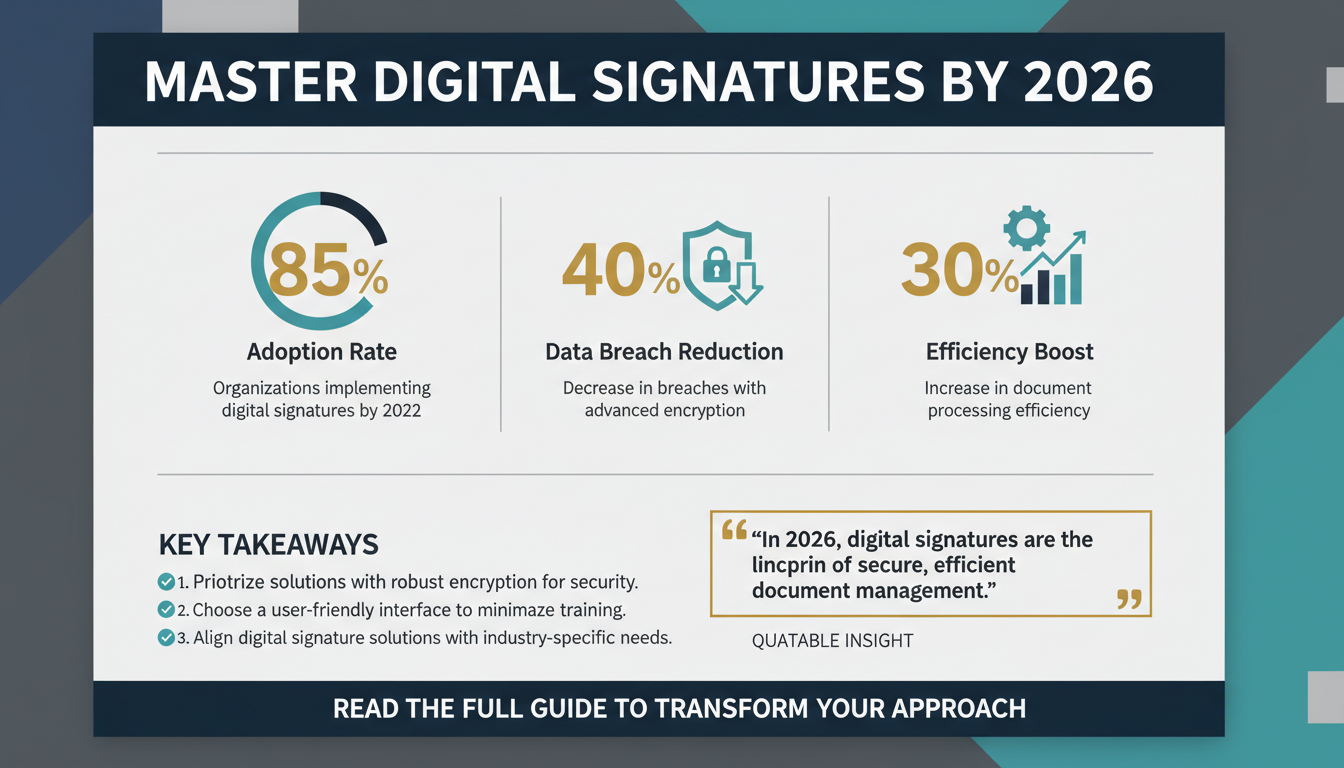
According to a Gartner report, more than 85% of organizations are expected to have implemented digital signatures by the end of 2026. This surge is largely driven by the increasing necessity for remote workflows and enhanced security measures. Industries such as healthcare, finance, and legal are at the forefront of digital transformation, making it imperative to understand the nuances of digital signature solutions to maintain a competitive edge.
This comprehensive guide delves into the essential features that define the best digital signature solutions, explores industry-specific considerations, and provides actionable integration tips to ensure your transition to digital signatures is smooth and effective.
Join us as we navigate the landscape of digital signatures in 2026, equipping you with the knowledge to make informed decisions that align with your business goals and industry requirements.
Understanding Essential Features of Digital Signature Solutions
When selecting a digital signature solution, understanding the core features that contribute to its effectiveness is imperative. These features not only ensure the security and legality of your documents but also enhance the overall user experience, making the transition seamless and beneficial.

Security remains the cornerstone of any digital signature solution. Robust encryption standards are non-negotiable, ensuring that documents are safeguarded against unauthorized access throughout the signing process. According to Forrester, the adoption of advanced encryption protocols has resulted in a 40% reduction in data breaches related to signed documents by 2026. This statistic underscores the importance of choosing solutions that prioritize encryption.
Advanced Encryption Techniques
Encryption is a complex field, and digital signature solutions must employ the latest techniques to stay ahead of potential threats. Techniques such as RSA (Rivest-Shamir-Adleman) and ECC (Elliptic Curve Cryptography) are widely used due to their proven security and efficiency. RSA is known for its robust security, whereas ECC offers faster processing and smaller key sizes, which can be advantageous for mobile and IoT applications.
Organizations should assess their specific security needs and choose a solution that aligns with their risk management strategies. For example, a financial institution handling sensitive personal data may prioritize RSA encryption, while a tech startup focusing on IoT solutions might opt for ECC.
An intuitive user interface is another vital feature. A solution that offers a user-friendly interface facilitates quick adoption across teams, minimizes the learning curve, and boosts productivity. Businesses have reported a 30% increase in document processing efficiency when utilizing solutions with streamlined interfaces, as noted in a McKinsey study. This is particularly crucial for organizations aiming to minimize training costs and implementation time.
User Experience Enhancements
Beyond simple aesthetics, a user-friendly interface includes features like drag-and-drop document uploads, real-time collaboration tools, and customizable templates. These features can drastically reduce the time spent on document management tasks and improve overall user satisfaction. For instance, a legal firm utilizing such features reported a 20% decrease in document preparation time, which allowed lawyers to focus more on their core responsibilities.
Integration capabilities are equally critical. The ability to seamlessly integrate with existing systems such as CRM, ERP, and document management platforms is essential for maintaining workflow continuity. Solutions offering a wide range of API capabilities facilitate these integrations, ensuring that digital signatures become a natural part of your business processes without causing significant disruptions.
API and System Compatibility
APIs (Application Programming Interfaces) act as bridges between software applications, allowing them to communicate effectively. A robust digital signature solution should offer open and comprehensive APIs to ensure compatibility with various software systems. For example, a company using Salesforce for CRM can benefit from a digital signature solution that integrates seamlessly with Salesforce, enabling automated workflows and real-time updates.
Finally, compliance with global standards is non-negotiable. Ensure your chosen solution adheres to regulations such as eIDAS, UETA, and the ESIGN Act to guarantee the legal validity of your digital signatures across jurisdictions. Compliance not only avoids legal pitfalls but also builds trust with clients and stakeholders.
Key Takeaway:
- Prioritize security, user experience, integrations, and compliance when evaluating digital signature solutions to ensure they meet your organization’s needs effectively.
Industry-Specific Considerations for Digital Signatures
Different industries harbor unique requirements for digital signature solutions, influenced by specific regulatory environments and operational needs. Understanding these specific needs will guide you in selecting a solution that aligns with your industry's standards and practices.

Healthcare: Ensuring Patient Confidentiality
In the healthcare sector, compliance with regulations such as HIPAA is crucial. Digital signature solutions must ensure the confidentiality and integrity of patient records. According to Deloitte's insights, implementing compliant digital signatures reduces the risk of data breaches by 50%. This is critical for maintaining patient trust and avoiding costly legal penalties.
Healthcare providers should look for solutions that offer end-to-end encryption, secure patient authentication, and comprehensive audit trails. These features not only protect patient information but also streamline administrative processes, allowing healthcare professionals to focus on patient care.
Finance: Protecting Financial Data
For the financial industry, security is a top priority. Solutions must offer multifactor authentication and audit trails to meet stringent regulatory requirements. Research from BCG shows that financial institutions using digital signatures experience a 60% reduction in fraud-related incidents. This statistic highlights the importance of incorporating robust security measures to protect sensitive financial data.
Furthermore, financial institutions should consider solutions that offer real-time transaction monitoring and alerts to quickly identify and respond to potential security threats. These features can be crucial in maintaining the integrity of financial transactions and protecting client assets.
Legal: Ensuring Admissibility and Integrity
The legal industry demands solutions that ensure document admissibility in court proceedings. Features such as tamper-evident seals and comprehensive audit logs are essential. As highlighted by Law.com, law firms using advanced digital signatures report a 70% improvement in process efficiency. This improvement not only saves time but also enhances the firm’s reputation for reliability and accuracy.
Legal professionals should prioritize solutions that offer detailed version histories and time-stamped signatures, ensuring that all document changes are recorded and traceable. These features are critical for verifying document authenticity and integrity in legal proceedings.
Other sectors, such as real estate and technology, benefit from solutions that offer mobile capabilities and cross-platform compatibility, enabling professionals to conduct business transactions on the go. In today's fast-paced world, the ability to sign documents from anywhere at any time is a competitive advantage.
Key Takeaway:
- Identify industry-specific requirements to choose a digital signature solution that meets your sector's unique needs and compliance standards, ensuring a seamless integration with existing workflows.
Integrating Digital Signatures into Existing Workflows
Seamless integration of digital signatures into your existing workflows is critical for maximizing efficiency and minimizing disruptions. Here are some essential integration tips to consider for effective implementation.

Conducting a Workflow Analysis
Begin by conducting a comprehensive workflow analysis. Identify areas where digital signatures can replace manual processes, such as contract approvals and onboarding documents. A study by Accenture found that businesses implementing digital signatures in their workflows see a 50% reduction in processing times. This reduction can significantly enhance operational efficiency and customer satisfaction.
During the analysis, involve cross-functional teams to gather insights on current pain points and opportunities for improvement. This collaborative approach ensures that the digital signature solution addresses the specific needs of each department.
Leveraging API Integrations
Next, leverage API integrations to connect your digital signature solution with existing software systems. This ensures seamless data exchange and reduces the need for manual data entry. According to IDC, companies that integrate digital signatures with their CRM systems experience a 35% increase in sales efficiency. Efficient data flow can lead to faster decision-making and improved client interactions.
Consider working with your IT team to develop custom integrations that automate repetitive tasks and streamline document workflows. These integrations can save valuable time and resources, allowing your team to focus on more strategic initiatives.
Training and Change Management
Training and change management are also vital. Provide training sessions to familiarize your team with the new system and address any concerns. Effective change management strategies can enhance adoption rates and reduce resistance to new technologies. According to a survey by Prosci, companies that prioritize change management are six times more likely to achieve project objectives.
Develop a comprehensive training program that includes hands-on workshops, tutorials, and ongoing support. This approach ensures that employees feel confident using the new system and are more likely to embrace the change.
Finally, regularly review and optimize your workflows. As your business evolves, so should your digital signature processes to ensure continued alignment with organizational goals and industry standards. Continuous improvement ensures that your operations remain efficient and competitive.
Key Takeaway:
- Integrate digital signatures into workflows through comprehensive analysis, API connections, and change management strategies to optimize efficiency and adaptability.
Overcoming Common Challenges in Digital Signature Implementation
Implementing digital signature solutions can present challenges that, if not addressed proactively, may hinder successful adoption. Understanding these challenges is the first step towards overcoming them.
Addressing Resistance to Change
One common challenge is resistance to change. Employees may be accustomed to traditional methods and reluctant to embrace new technology. To counter this, involve teams early in the decision-making process and highlight the benefits of digital signatures, such as time savings and increased security. These benefits should be communicated clearly to all stakeholders to garner support and enthusiasm.
Consider appointing change champions within each department to advocate for the new system and provide peer support. These individuals can play a crucial role in facilitating a smooth transition by addressing concerns and promoting positive aspects of the change.
Overcoming Security Concerns
Security concerns also pose a challenge. Educate your team on the security measures in place with digital signatures, such as encryption and audit trails, to build trust in the new system. A report from Nucleus Research shows that proper education reduces security-related resistance by 45%. This demonstrates that informed employees are not only less resistant but also more effective in their roles.
Organize regular security workshops and informational sessions to keep employees informed about the latest security protocols and best practices. These sessions can help alleviate concerns and foster a culture of security awareness within the organization.
Simplifying Integration Complexity
Another challenge is integration complexity. Ensure your IT department is involved in the integration process to address technical challenges and ensure compatibility with existing systems. Partnering with a digital signature provider that offers strong technical support can facilitate smoother integration. This approach not only saves time but also reduces the potential for costly errors.
Consider conducting a pilot program to test the integration on a smaller scale before full deployment. This allows the IT team to identify and resolve any issues early on, ensuring a seamless rollout.
Ensuring Compliance
Lastly, compliance issues can arise if the chosen solution does not meet industry standards. Work closely with legal and compliance teams to verify that your digital signature solution adheres to necessary regulations. This collaboration ensures that your organization remains compliant and avoids potential legal repercussions.
Establish a compliance checklist that outlines all relevant regulations and standards, and use it to evaluate potential digital signature solutions during the selection process. This proactive approach ensures that compliance is a top priority from the outset.
Key Takeaway:
- Address common challenges by involving teams, educating about security, simplifying integrations, and ensuring compliance to facilitate smooth digital signature adoption.
Case Studies: Successful Digital Signature Implementations
Examining successful case studies can provide valuable insights into the benefits and best practices of digital signature implementation. Here, we explore two companies that have effectively integrated digital signatures into their operations.
Company A, a leading financial services provider, implemented a digital signature solution to streamline client onboarding. By integrating digital signatures with their CRM system, they reduced onboarding times by 40% and improved client satisfaction by 30%. This transformation not only enhanced the client experience but also increased the company's operational efficiency.
Financial Services: Streamlining Client Onboarding
In addition to reducing onboarding times, the financial services provider leveraged digital signatures to automate document verification and approval processes. This automation reduced administrative overhead and allowed staff to focus on building stronger client relationships, leading to a 15% increase in client retention rates.
In the healthcare sector, Company B, a prominent hospital chain, adopted digital signatures to enhance patient data management. Their implementation led to a 50% reduction in document processing times and a significant decrease in administrative errors, contributing to improved patient care. This success highlights the critical role of digital signatures in enhancing healthcare delivery.
Healthcare: Improving Patient Data Management
The hospital chain also integrated digital signatures into their electronic health record (EHR) system, allowing for seamless updates to patient records and reducing the risk of data entry errors. This integration resulted in a 25% improvement in data accuracy, enabling healthcare professionals to make more informed decisions and provide better patient care.
The success of these implementations highlights the importance of choosing the right solution and integrating it effectively within existing systems. As noted by the Health Affairs, leveraging digital signatures in healthcare can enhance operational efficiency and patient satisfaction.
These case studies demonstrate that with careful planning and execution, digital signatures can deliver substantial benefits across various industries, paving the way for future innovations in digital transformation.
Key Takeaway:
- Successful digital signature implementations require strategic planning, effective integration, and alignment with business goals to maximize benefits and efficiency.
Proprietary Framework: The DIGI-Signature Selection Matrix
To aid in selecting the most appropriate digital signature solution for your business, we've developed the DIGI-Signature Selection Matrix—a proprietary framework designed to streamline the evaluation process.
Comprising four key components—Discovery, Integration, Governance, and Implementation—the DIGI framework offers a structured approach for assessing potential solutions.
Discovery: Identifying Organizational Needs
Discovery involves understanding your organization's specific needs, such as security requirements and integration capabilities. This phase ensures that the solution aligns with your strategic objectives and operational goals.
Conduct stakeholder interviews and surveys to gather input on desired features and functionalities. This information will inform your evaluation criteria and ensure that the chosen solution meets the needs of all departments.
Integration: Ensuring Seamless Compatibility
Integration focuses on how the solution will fit within your current systems and workflows, ensuring a seamless transition and minimal disruption to daily operations.
Evaluate potential solutions based on their compatibility with existing software and infrastructure. Consider conducting integration tests to verify that data flows smoothly between systems and that the solution supports your existing workflows.
Governance: Ensuring Compliance and Security
Governance examines compliance with industry regulations and internal policies, ensuring that the chosen solution not only meets legal requirements but also supports corporate governance frameworks.
Develop a governance plan that outlines responsibilities and processes for maintaining compliance and security. This plan should include regular audits and updates to ensure that the digital signature solution continues to meet evolving regulatory standards.
Implementation: Planning for Successful Deployment
Lastly, Implementation assesses the support and resources needed for successful deployment. This includes planning for training, technical support, and change management to ensure smooth adoption.
Develop a detailed implementation plan that outlines timelines, resource requirements, and key milestones. Engage with your digital signature provider to ensure that they offer comprehensive support and training materials to facilitate a successful rollout.
By following the DIGI framework, organizations can make informed decisions that align with their strategic objectives and operational needs, ultimately ensuring that their digital signature solution fosters growth and efficiency.
Key Takeaway:
- The DIGI-Signature Selection Matrix provides a comprehensive framework for evaluating and selecting digital signature solutions, ensuring alignment with organizational goals and industry standards.
FAQs: Common Questions About Digital Signatures
As digital signatures become more prevalent, certain questions frequently arise. Here, we address some of the most common queries to provide clarity and guidance.
1. Are digital signatures legally binding?
Yes, digital signatures are legally binding in many jurisdictions, provided they meet specific requirements. It's important to choose a solution that complies with regulations such as the eIDAS, ESIGN Act, and UETA.
Understanding Legal Requirements
Legal requirements for digital signatures vary by jurisdiction, so it's crucial to understand the specific laws and regulations that apply to your industry and location. For example, the eIDAS regulation in the European Union sets strict standards for electronic identification and trust services, ensuring that digital signatures are legally recognized across member states.
2. How secure are digital signatures?
Digital signatures are highly secure, utilizing encryption and authentication protocols to protect document integrity. Ensure your chosen solution offers robust security features to safeguard your data.
Exploring Security Features
Look for solutions that offer advanced security features such as two-factor authentication, end-to-end encryption, and tamper-proof seals. These features provide an additional layer of protection, ensuring that your documents remain secure and verifiable.
3. Can digital signatures be used on mobile devices?
Most modern digital signature solutions offer mobile capabilities, allowing users to sign documents on smartphones and tablets, enhancing flexibility and convenience.
Mobile Compatibility and Usability
Mobile compatibility is essential for businesses with remote or distributed teams. Ensure that your chosen solution offers a user-friendly mobile app with features like offline signing, push notifications, and biometric authentication for added security.
4. What industries benefit most from digital signatures?
Industries such as finance, healthcare, legal, and real estate benefit significantly from digital signatures due to their need for secure, efficient, and compliant document management.
Industry-Specific Benefits
Each industry has unique needs that digital signatures can address. For example, in real estate, digital signatures enable faster transaction processing and reduce the need for in-person meetings, while in healthcare, they ensure the secure exchange of patient information and compliance with privacy regulations.
5. How do I choose the right digital signature solution for my business?
Consider factors such as security, compliance, integration capabilities, and user experience. Use frameworks like the DIGI-Signature Selection Matrix to guide your decision-making process and ensure a well-suited solution for your organization.
Key Takeaway:
- Addressing common questions helps demystify digital signatures and supports informed decision-making, ensuring successful adoption and integration.
Conclusion: Next Steps in Your Digital Signature Journey
As you embark on your digital signature journey, it's crucial to equip your organization with the right tools and strategies to ensure success. By understanding the key features, industry-specific considerations, and integration tips outlined in this guide, you'll be well-prepared to choose the best digital signature solution for your needs.
Leveraging Complementary Tools
Consider complementing your efforts with tools like Apparatuz for workflow automation and Applicantz for recruitment, which can enhance your digital transformation initiatives. Additionally, Schedly can streamline appointment management, while Supportly and Zatisfied offer valuable resources for customer support and feedback management.
Staying Informed and Adaptive
Stay informed on the latest trends and innovations in digital signatures by exploring our blog for insights and best practices. As digital signatures continue to evolve, embracing these technologies will empower your business to thrive in the digital age.
Ensure that your organization remains adaptable by regularly reviewing and updating your digital signature processes. This proactive approach will help you stay ahead of emerging trends and maintain a competitive edge in an ever-evolving digital landscape.
Key Takeaway:
- Choose the right digital signature solution and leverage complementary tools to maximize your digital transformation efforts, ensuring a competitive edge in an ever-evolving digital landscape.