
Introduction: The Modern Necessity of Digital Signatures
In today's increasingly globalized business environment, the traditional boundaries of work have dissolved. Teams are no longer confined to a single location or even a single time zone. This shift has necessitated a transformation in how businesses manage workflows, especially when it comes to document management and approvals. Digital signatures have emerged as a critical tool in this new landscape, ensuring that international teams can collaborate securely and efficiently, regardless of their physical location.

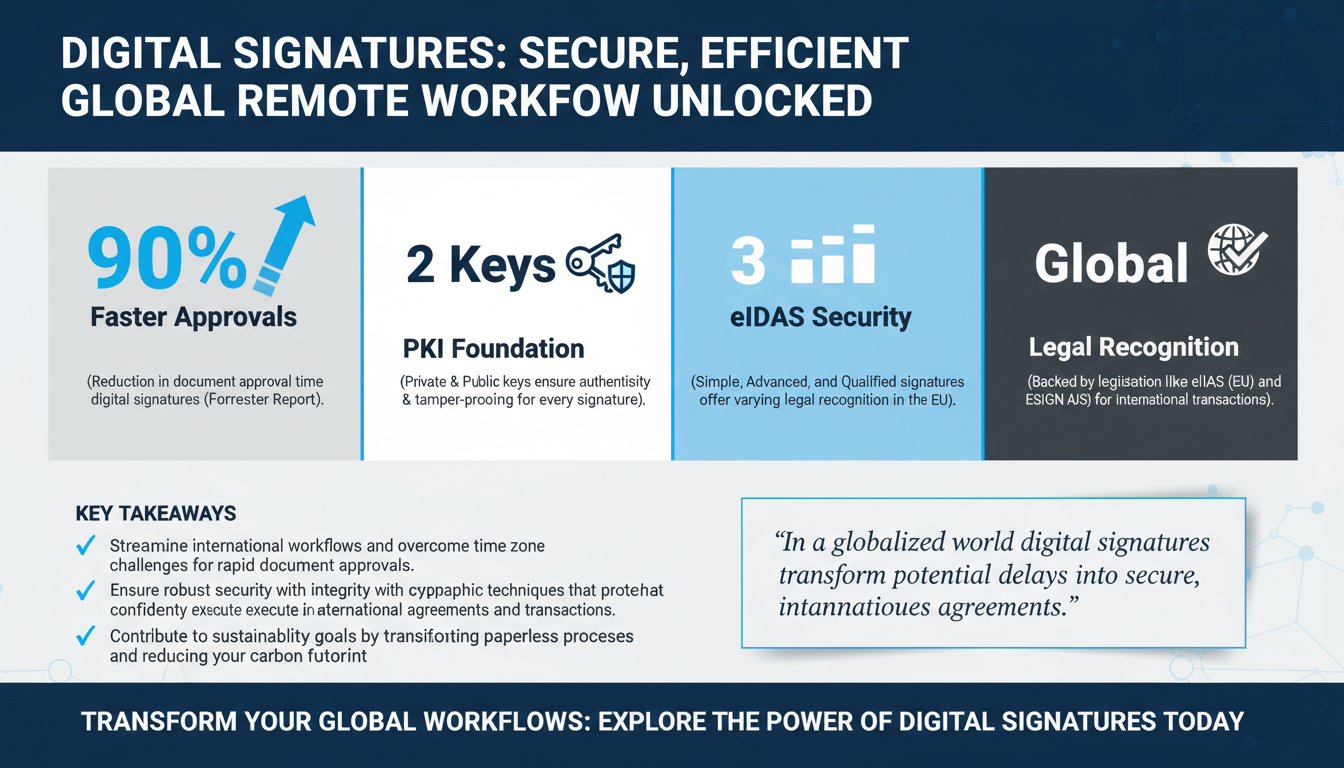
Digital signatures offer a secure and legally binding way to sign documents, replacing traditional pen-and-paper signatures. They provide a level of convenience and speed that is essential in today's fast-paced business world. According to a Forrester report, companies that implement digital signature solutions see a 90% reduction in the time required for document approvals. This efficiency is particularly crucial for international teams, where time zone differences can otherwise lead to delays.
Moreover, the security of digital signatures cannot be overstated. They use cryptographic techniques to verify the authenticity of a document and the identity of the signer, providing a robust layer of protection against fraud and tampering. As businesses handle increasingly sensitive information and face strict compliance requirements across various jurisdictions, digital signatures offer a solution that aligns with both security and regulatory needs.
In addition, digital signatures contribute significantly to sustainability efforts by reducing the need for paper. Organizations can minimize their carbon footprint by transitioning to digital processes, supporting eco-friendly business practices. As more companies adopt remote work, digital signatures help streamline operations, reducing reliance on physical infrastructure and increasing overall efficiency.
As we delve deeper, we will explore the technical foundations of digital signatures, their impact on workflow efficiency, security and compliance benefits, real-world applications, and future trends that will shape their evolution.
Understanding Digital Signatures: The Foundation of Secure Workflows
To appreciate the impact of digital signatures on international workflows, it's important to first understand their technical underpinnings. Digital signatures rely on public key infrastructure (PKI), a framework that uses a pair of keys: a private key and a public key. The private key, known only to the signer, creates the signature, while the public key is used to verify it. This dual-key system ensures that the signature is both authentic and tamper-proof.
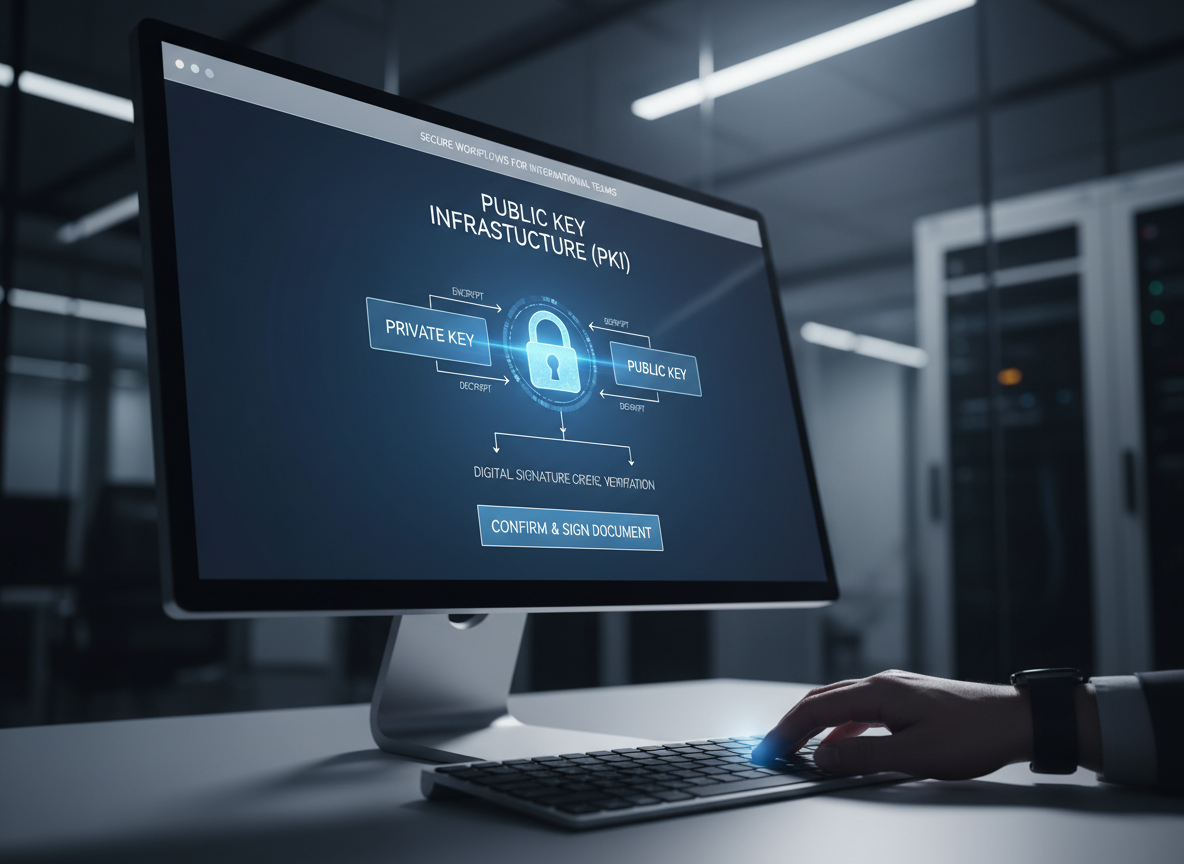
One of the key advantages of digital signatures is their ability to maintain the integrity of a document. Any alteration to a document after it has been signed invalidates the signature, providing a clear indicator of tampering. This feature is particularly valuable in industries such as finance and healthcare, where documents often contain sensitive data that must remain secure and unchanged.
Legal Assurance and Global Recognition
In addition to technical security, digital signatures also provide legal assurance. Many countries have enacted legislation that recognizes digital signatures as legally binding, including the eIDAS regulation in the European Union and the ESIGN Act in the United States. These laws ensure that businesses can confidently rely on digital signatures for international transactions and agreements.
For instance, under the eIDAS regulation, electronic signatures are categorized into three levels: simple, advanced, and qualified. Each level offers varying degrees of security and legal recognition, with qualified electronic signatures providing the highest assurance and equivalence to handwritten signatures. Understanding these distinctions is crucial for businesses operating across borders, ensuring compliance with relevant legal frameworks.
Expert Insight: The Role of PKI in Digital Security
"The robustness of digital signatures lies in the use of public key infrastructure. PKI not only secures the transaction but also builds trust among parties involved, especially in cross-border dealings where trust is paramount," says Dr. Emily Ross, a cybersecurity expert with over 20 years of experience in digital security.
Enhancing Workflow Efficiency: A Key Benefit of Digital Signatures
One of the most compelling reasons for adopting digital signatures is their ability to enhance workflow efficiency. Traditional document approval processes are often plagued by delays due to the need for physical signatures, especially when dealing with international teams. Digital signatures eliminate these bottlenecks by allowing documents to be signed and approved electronically, regardless of the signers' locations.

For example, a financial institution conducting cross-border transactions can significantly reduce processing times by using digital signatures. According to a McKinsey study, organizations that implement digital solutions for document management achieve a 30% increase in productivity and a 20% reduction in operational costs. These efficiencies translate into faster decision-making and a more agile business operation.
Integration with Digital Tools
Furthermore, digital signatures facilitate seamless integration with other digital tools, such as document management systems and workflow automation platforms. This integration streamlines processes by automatically routing documents to the appropriate parties for review and approval, reducing the risk of human error and ensuring compliance with organizational policies.
Moreover, the ability to automate repetitive tasks, such as reminders for document approvals, frees up valuable time for employees to focus on more strategic initiatives. By leveraging digital signatures, businesses can optimize their resource allocation, leading to improved productivity and a more dynamic work environment.
Pro Tip: Automate Routine Tasks
"Automation is key to maximizing the benefits of digital signatures. By integrating these signatures with your existing digital tools, you can automate repetitive tasks and focus on strategic growth," suggests Sarah Thompson, a business process automation consultant.
Security and Compliance: Meeting International Standards
Security and compliance are paramount concerns for any business operating in a global environment. Digital signatures address these concerns by providing a secure and compliant method for executing documents. They offer robust protection against unauthorized access and ensure that documents are signed by the intended parties.

Regulatory compliance is a significant challenge for international teams, as different regions have varying requirements for electronic signatures. Digital signature solutions, such as those provided by Zignature, are designed to meet these diverse standards. For instance, the European Union's eIDAS regulation sets stringent requirements for electronic identification and trust services, which digital signatures fulfill, providing legal certainty for electronic transactions.
Comprehensive Audit Trails
Moreover, digital signatures offer a comprehensive audit trail, which is essential for regulatory compliance and internal audits. This trail includes information about who signed the document, when it was signed, and any changes made to the document. Such transparency is invaluable in industries like healthcare and finance, where compliance with regulations like HIPAA and GDPR is critical.
Security features, such as multi-factor authentication and encryption, further enhance the protection offered by digital signatures. By requiring multiple forms of verification before access is granted, businesses can safeguard sensitive information from unauthorized access, ensuring data integrity and privacy.
Expert Insight: Navigating Compliance Complexities
"Navigating the complex landscape of international compliance can be daunting. Digital signatures provide a reliable mechanism to ensure compliance while maintaining security across borders," explains John Martinez, a compliance strategist specializing in international regulations.
Overcoming Common Challenges: A Practical Guide
Despite their numerous benefits, implementing digital signatures can present challenges, particularly for international teams. One common issue is the integration of digital signature solutions with existing IT infrastructure. Organizations must ensure that their chosen solution is compatible with their current systems and can easily integrate with other digital tools.
Ensuring Compatibility and Integration
To avoid potential integration headaches, businesses should conduct a thorough assessment of their IT infrastructure before selecting a digital signature solution. This involves evaluating existing systems, identifying potential integration points, and choosing a solution that offers robust API support for seamless connectivity.
Another challenge is user adoption. Employees accustomed to traditional methods may be resistant to change. To overcome this, organizations should provide comprehensive training and support to help users become comfortable with the new technology. Highlighting the benefits of digital signatures, such as increased efficiency and security, can also encourage adoption.
Legal Considerations and Compliance
Legal considerations can also pose challenges, as businesses must ensure that their digital signature practices comply with relevant laws and regulations. Consulting with legal experts and choosing a solution that adheres to international standards can mitigate these concerns.
Additionally, establishing clear guidelines and protocols for the use of digital signatures within the organization can facilitate a smoother transition. Regular feedback sessions and continuous assessment of the implementation process can help identify areas for improvement, ensuring that the technology is effectively integrated into existing workflows.
Pro Tip: Engage Stakeholders Early
"Engaging stakeholders early in the process can smooth the transition to digital signatures. By involving key players from the start, you ensure buy-in and address concerns proactively," advises Linda Chen, a digital transformation consultant.
Case Studies: Success Stories of International Teams
Several organizations have successfully implemented digital signatures to enhance their international workflows. For instance, a global real estate firm streamlined its cross-border transactions by adopting digital signatures, reducing the time required to close deals by 40%. This efficiency not only improved customer satisfaction but also increased the firm's competitiveness in the market.
Similarly, a multinational healthcare provider leveraged digital signatures to manage patient records across different countries. This approach ensured compliance with local data protection laws while enhancing the security and accessibility of patient information. As a result, the provider reported a 50% reduction in administrative costs and a 60% increase in data accuracy.
Legal Firms and Contract Management
In another example, an international law firm implemented digital signatures to streamline their contract management process. By replacing manual signatures with digital ones, the firm reduced the time spent on administrative tasks by 70%, allowing lawyers to dedicate more time to client-facing activities and strategic advisory services.
These case studies demonstrate the tangible benefits of digital signatures for international teams. By facilitating secure and efficient workflows, digital signatures enable organizations to achieve their business objectives while maintaining compliance with international standards.
Expert Insight: Leveraging Digital Signatures for Competitive Advantage
"Digital signatures can be a significant competitive advantage, especially in industries where speed and efficiency are key differentiators. They allow businesses to act swiftly and decisively in the global market," notes Mike Hernandez, a strategic operations advisor.
Future Trends: The Evolution of Digital Signatures
The future of digital signatures looks promising, with advancements in technology continuing to enhance their capabilities. One emerging trend is the integration of artificial intelligence (AI) and machine learning (ML) with digital signature solutions. These technologies can automate the verification process, further reducing the time required for document approvals.
Blockchain Integration
Blockchain technology is also set to play a significant role in the future of digital signatures. Its decentralized nature offers an additional layer of security and transparency, making it an attractive option for businesses looking to enhance their document management processes. According to a study by Gartner, 75% of digital signature solutions will incorporate blockchain by 2028.
Additionally, as remote work becomes increasingly prevalent, digital signature solutions are evolving to better meet the needs of distributed teams. Features such as mobile compatibility and real-time collaboration tools are becoming standard, enabling teams to work together seamlessly from anywhere in the world.
Biometric Authentication
The integration of biometric authentication methods, such as fingerprint and facial recognition, is also on the horizon, offering enhanced security and user convenience. As these technologies mature, digital signatures will become even more integral to secure and efficient business operations.
Expert Insight: The Future of Digital Signature Technology
"The integration of AI and blockchain with digital signatures is not just a trend; it's a transformation. These technologies will redefine how businesses perceive security and efficiency," predicts Alex Morgan, a technology futurist.
FAQs: Common Questions About Digital Signatures
1. Are digital signatures legally binding internationally?
Yes, digital signatures are recognized as legally binding in many countries, thanks to legislation like the eIDAS regulation in the EU and the ESIGN Act in the US. However, it's important to ensure that the digital signature solution complies with the specific legal requirements of each jurisdiction.
2. How do digital signatures enhance security?
Digital signatures use cryptographic techniques to ensure the authenticity and integrity of a document. They provide a secure way to verify the identity of the signer and detect any alterations to the document after signing.
3. Can digital signatures be used for all types of documents?
Digital signatures can be used for a wide range of documents, including contracts, agreements, and forms. However, it's important to verify that the document type and the use case comply with relevant legal and regulatory standards.
4. How can international teams implement digital signatures effectively?
To implement digital signatures effectively, international teams should ensure compatibility with existing systems, provide user training, and adhere to relevant legal standards. Choosing a reputable provider like Zignature can also help streamline the process.
5. What are the cost implications of using digital signatures?
While there may be initial setup costs, digital signatures can lead to significant savings by reducing the time and resources needed for document management. Additionally, they help avoid costs associated with compliance breaches and document fraud.
Conclusion: Embracing the Future with Digital Signatures
As the world of work continues to evolve, digital signatures stand out as a key enabler of secure and efficient remote workflows for international teams. By offering a secure, legally compliant, and efficient means of managing documents, they empower businesses to operate seamlessly across borders. The adoption of digital signatures is not just a trend; it's a strategic move that aligns with the future of work.
For businesses looking to enhance their workflows, integrating digital signature solutions with other tools can provide a comprehensive approach to automation and efficiency. Platforms like Apparatuz and Schedly offer additional capabilities that complement digital signatures, creating a robust digital ecosystem.
As you consider implementing digital signatures, remember that the right strategy can transform your business operations, making them more agile, secure, and competitive in the global market. The future is digital, and with the right tools, your business can lead the way.
Explore more about how digital signatures can enhance your business with our detailed guides on eco-friendly practices and workflow efficiency.