
Introduction: The Green Revolution in Business Practices
In the midst of the 21st century, businesses are increasingly focusing on sustainability as a core value. With climate change posing a significant risk to global stability, companies are leveraging technology to reduce their carbon footprint and operate in a more environmentally friendly manner. One such technology at the forefront of this green revolution is the digital signature. By eliminating the need for paper-based processes, digital signatures are enabling businesses to significantly cut down on waste and emissions. This article explores how Zignature, a leading digital signature solution, is facilitating eco-friendly business practices and contributing to a sustainable future.
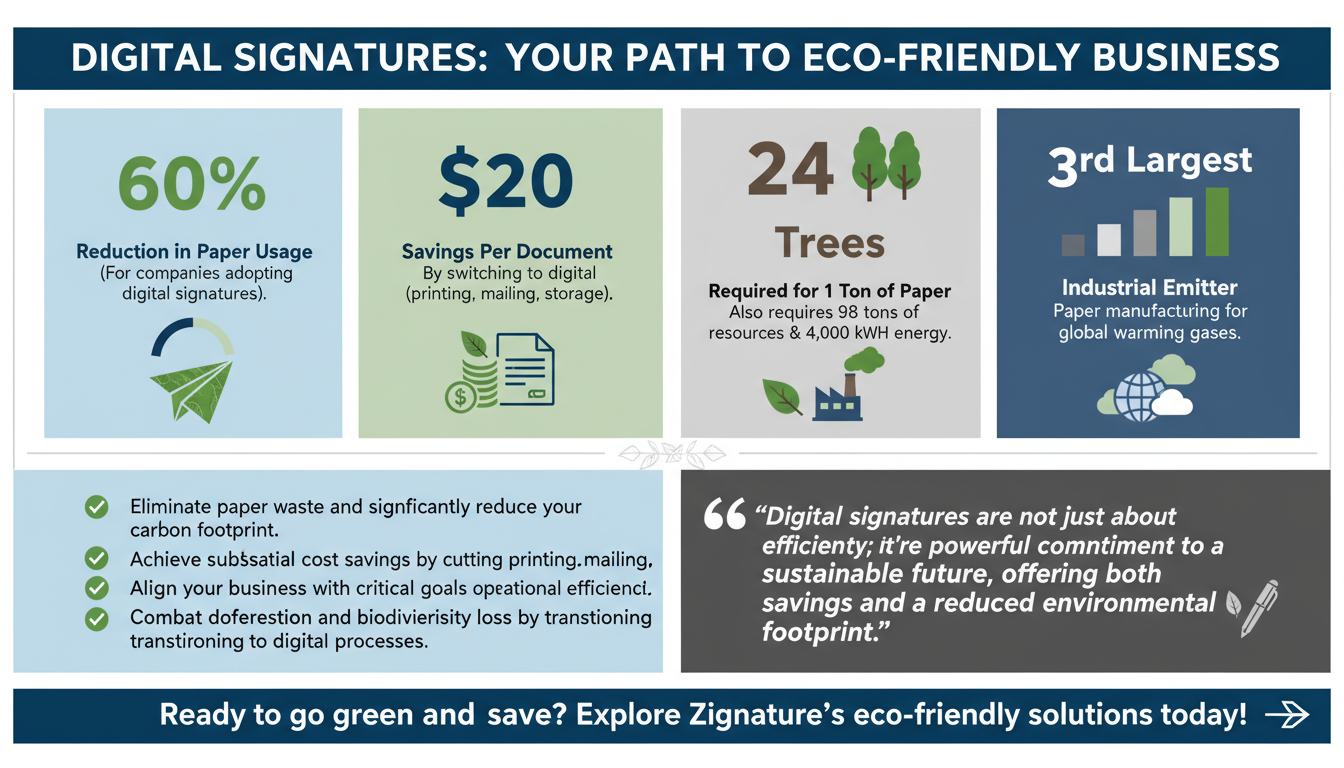
According to a report by Statista, companies that have adopted digital signatures have seen a 60% reduction in paper usage, translating to substantial environmental benefits. Furthermore, Forrester Research indicates that businesses can save up to $20 per document by switching to digital signatures, factoring in printing, mailing, and storage costs. As businesses become more aware of these benefits, the adoption of digital signatures is expected to grow exponentially.
This comprehensive guide will delve into the specifics of how digital signatures like Zignature contribute to eco-friendly business practices. From reducing paper waste to cutting down on energy consumption, digital signatures are a powerful tool for any organization committed to sustainability. We'll also examine common pitfalls to avoid and provide actionable steps for integrating digital signatures into your business model seamlessly.
The Environmental Impact of Traditional Paper-Based Processes
The traditional business model, reliant on paper-based processes, is not only inefficient but also environmentally detrimental. According to the Environmental Paper Network, the production of one ton of paper requires 24 trees, 98 tons of resources, and results in 4,000 kilowatts of energy consumption. Moreover, the carbon footprint of paper production is significant, contributing to deforestation and greenhouse gas emissions. A report by the U.S. Environmental Protection Agency highlights that paper manufacturing is the third-largest industrial emitter of global warming gases.
In addition to the environmental costs, paper-based processes are economically burdensome. The costs associated with printing, storage, and disposal of paper documents can be substantial. Gartner reports that companies spend an average of 1-3% of their revenue on document-related activities. With the shift towards digital solutions, businesses can significantly reduce these expenses while also minimizing their environmental impact.
By transitioning to digital signatures, businesses can eliminate the need for paper, thereby reducing their carbon footprint. This shift not only aligns with corporate social responsibility goals but also enhances operational efficiency. As more companies recognize the dual benefits of cost savings and environmental sustainability, the move away from paper is becoming an essential strategy for modern business operations.
Understanding Paper Waste: A Global Perspective
Paper waste is a global issue with significant implications for both the environment and the economy. According to the World Wildlife Fund (WWF), paper accounts for roughly 26% of total waste at landfills. In the United States alone, approximately 68 million trees are cut down each year to produce paper and paper products. This vast consumption not only leads to deforestation but also contributes to biodiversity loss and soil erosion. By reducing reliance on paper through digital signatures, businesses can play a crucial role in mitigating these environmental impacts.
Economic Benefits of Reducing Paper Usage
Beyond environmental considerations, reducing paper usage offers substantial economic benefits. Businesses can save on costs associated with purchasing paper, printing, and storage. Additionally, digital documents are easier to manage and access, leading to improved productivity and reduced time spent on administrative tasks. A study by McKinsey & Company found that organizations that digitize their document workflows can improve operational efficiency by up to 20%. This efficiency translates to better customer service and faster decision-making processes.
Pro Tip: "Implement a paperless policy in your organization by setting measurable goals for paper reduction and regularly reviewing progress. Encourage employees to adopt digital tools and provide training to facilitate the transition."

How Digital Signatures Reduce Carbon Footprint
Digital signatures play a crucial role in reducing the carbon footprint of businesses by eliminating the need for physical document handling. A study by GreenBiz reveals that digital transactions can reduce carbon emissions by up to 90% compared to traditional paper-based methods. This reduction is achieved through decreased paper consumption, minimized transportation needs, and reduced energy usage.
Transportation of physical documents is a significant contributor to carbon emissions, particularly in industries such as legal and real estate, where documents are frequently exchanged between parties. Digital signatures eliminate the need for couriers and postal services, significantly reducing transportation-related emissions. Additionally, digital documents are stored electronically, reducing the need for physical storage space and the associated energy consumption for climate control and lighting.
Leveraging Cloud-Based Solutions
The adoption of digital signatures also supports the use of renewable energy sources. By integrating with cloud-based platforms like Zignature, businesses can leverage data centers powered by renewable energy, further reducing their carbon footprint. This approach not only supports environmental sustainability but also aligns with consumer expectations for responsible business practices. Data centers are increasingly adopting renewable energy solutions; for instance, Google has committed to operating entirely on carbon-free energy by 2030, setting a benchmark for sustainable digital infrastructure.
Overall, digital signatures offer a comprehensive solution for businesses looking to reduce their environmental impact. By streamlining document workflows and eliminating the need for paper and transportation, companies can achieve significant carbon savings, contributing to a more sustainable future.
Quantifying Carbon Savings
Quantifying the carbon savings from digital signatures is essential for understanding their impact. Businesses can calculate their carbon footprint reduction by assessing the decrease in paper usage and the elimination of transportation emissions. Tools like the Greenhouse Gas (GHG) Protocol provide frameworks for measuring and managing emissions. By incorporating these tools into their sustainability strategies, companies can accurately report their progress and set realistic goals for further reductions.
Expert Insight: "Consider using lifecycle assessment tools to evaluate the environmental impact of your document management processes. This holistic approach provides insights into the direct and indirect emissions associated with both digital and paper-based workflows."

Integrating Digital Signatures into Business Workflows
Integrating digital signatures into business workflows is a strategic move that can enhance efficiency while promoting sustainability. The process involves several key steps, beginning with selecting the right digital signature provider, such as Zignature. According to a Gartner report, factors to consider include security features, ease of use, and integration capabilities with existing systems.
Once a provider is selected, businesses should conduct a comprehensive assessment of their current document workflows to identify areas where digital signatures can be implemented. This assessment should focus on high-volume document processes, such as contract management, invoicing, and HR paperwork, where the impact of digital signatures can be most pronounced.
Phased Implementation and Training
Next, businesses should develop a phased implementation plan, starting with a pilot project to test the integration of digital signatures in a controlled environment. This approach allows for the identification and resolution of any potential issues before full-scale deployment. Training and support are critical components of this phase, ensuring that employees are comfortable with the new system and can leverage it effectively. For example, offering workshops or online tutorials can help employees adapt to new tools and increase overall efficiency.
Additionally, engaging employees in the transition process can foster a culture of innovation and sustainability. Encouraging feedback and adapting the implementation strategy based on employee experiences can lead to more effective adoption and continuous improvement of the digital signature processes.
Measuring Success and Continuous Improvement
Finally, measuring the impact of digital signatures on sustainability goals is essential. Businesses should track metrics such as paper usage, processing times, and carbon emissions to quantify the benefits of digital signatures. By continually assessing these metrics, companies can refine their workflows and further enhance their eco-friendly practices. Implementing a feedback loop where employees can report challenges and successes can also aid in fine-tuning the system for better results.
Pro Tip: "Consider setting up a cross-functional team dedicated to overseeing the digital signature integration. This team can ensure that all departments are aligned and that the transition supports overall business objectives."

Overcoming Challenges in Digital Signature Adoption
While the benefits of digital signatures are clear, businesses may encounter challenges during adoption. One common obstacle is resistance to change, as employees may be accustomed to traditional paper-based processes. To overcome this, companies should focus on change management strategies that emphasize the advantages of digital signatures, such as increased efficiency and reduced environmental impact.
Security concerns are another potential hurdle. Businesses must ensure that digital signatures are secure and legally binding, which requires compliance with regulations such as the eIDAS Regulation in Europe and the ESIGN Act in the United States. Partnering with a reputable provider like Zignature, which adheres to these standards, can mitigate these concerns.
Navigating Technical Challenges
Technical challenges may also arise, particularly in integrating digital signatures with existing systems. Businesses should work closely with their IT departments and digital signature providers to address compatibility issues and ensure seamless integration. This may involve updating software or reconfiguring workflows to accommodate digital processes. Conducting a thorough technical audit before implementation can help identify potential integration issues and allow for preemptive solutions.
Organizations can also benefit from fostering a culture of continuous learning by hosting regular sessions where employees can share their experiences and solutions. This collaborative approach can help in collectively overcoming technical challenges and improving the adoption process.
Building Stakeholder Buy-In
Gaining stakeholder buy-in is crucial for successful adoption. Highlighting the long-term benefits of digital signatures, such as cost savings and enhanced sustainability, can help build a compelling case for change. Engaging stakeholders early in the process and maintaining open lines of communication can foster a supportive environment for transition.
Expert Insight: "Incorporate feedback loops where employees can share their experiences and challenges with digital signature adoption. This approach not only improves the system but also encourages a sense of ownership and collaboration among staff."

Case Studies: Success Stories of Eco-Friendly Practices
Several businesses have successfully leveraged digital signatures to implement eco-friendly practices. One notable example is a multinational corporation in the banking sector that transitioned to digital signatures for its loan processing. This change resulted in a 75% reduction in paper usage and a significant decrease in processing time, contributing to both environmental and operational efficiency.
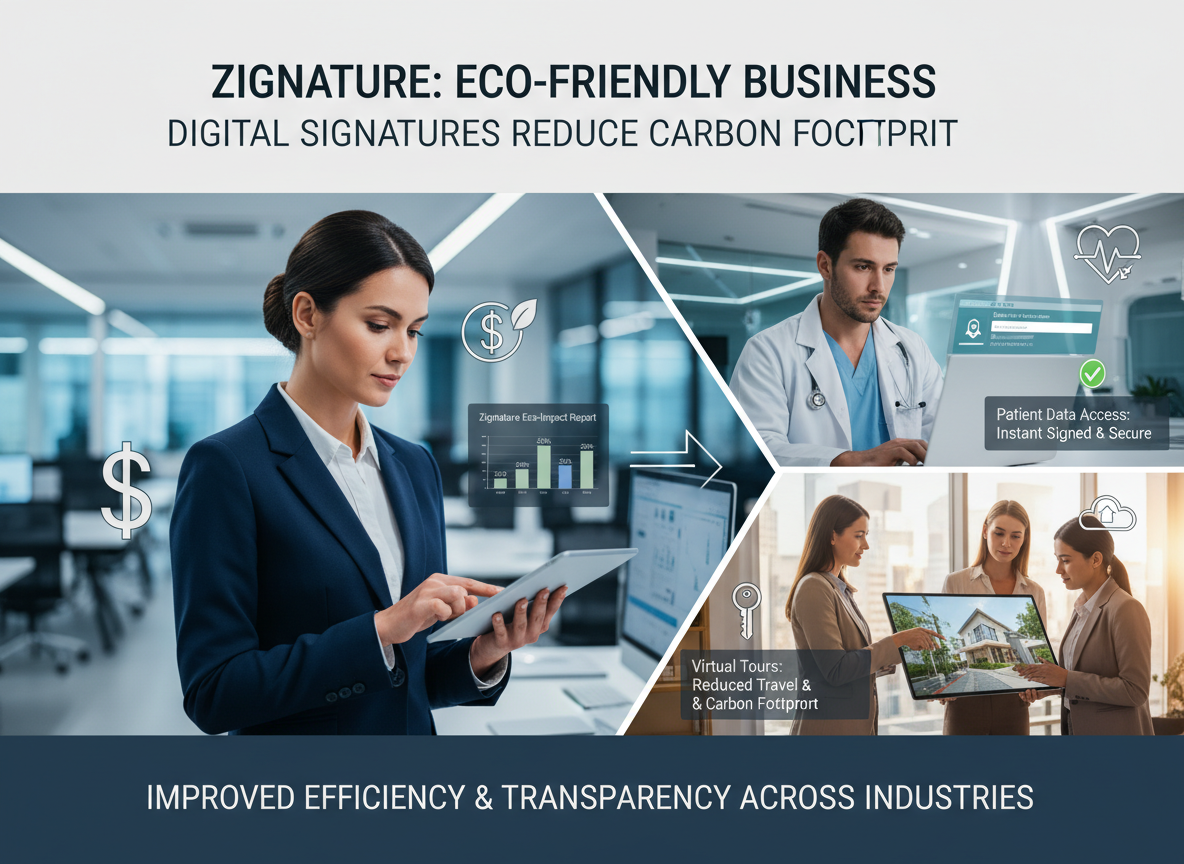
Another case study involves a healthcare provider that integrated digital signatures into its patient records management. By eliminating the need for physical document storage, the provider reduced its energy consumption by 40%, aligning with its sustainability goals and improving patient data security.
Real Estate Industry Transformation
In the real estate industry, a leading agency adopted digital signatures for property transactions, which streamlined the closing process and reduced the need for in-person meetings. This approach not only minimized carbon emissions associated with travel but also enhanced customer satisfaction by expediting transactions. By using digital platforms, the agency was able to complete transactions 30% faster, significantly improving client relations and operational efficiency.
Government Sector Innovations
Governments are also increasingly adopting digital signatures to enhance public service delivery while reducing environmental impact. For instance, the city of Los Angeles implemented digital signatures for its permit approval processes, reducing paper usage by 50% and significantly cutting down on processing times. This initiative not only improved efficiency but also increased transparency and accountability in public service.
These case studies illustrate the diverse applications of digital signatures across industries and their potential to drive sustainability. By adopting digital solutions, businesses can achieve significant environmental savings while enhancing their operational capabilities.
Zignature's Role in Promoting Sustainable Business Practices
Zignature stands out as a leader in promoting sustainable business practices through its innovative digital signature solutions. The platform offers a range of features designed to enhance efficiency and reduce environmental impact, including secure document storage, seamless integration with existing systems, and support for multiple file formats.
One of Zignature's key strengths is its commitment to security and compliance. By adhering to international standards and regulations, Zignature ensures that digital signatures are legally binding and secure, providing businesses with peace of mind as they transition to digital workflows.
Analytics and Sustainability Tracking
Zignature also supports businesses in tracking their sustainability metrics, offering analytics tools that measure the environmental impact of digital signature adoption. These insights enable companies to quantify their carbon savings and demonstrate their commitment to eco-friendly practices to stakeholders. Businesses can use these analytics to set benchmarks and continuously improve their sustainability strategies.
Furthermore, Zignature’s platform is designed to integrate with various business applications, facilitating a smooth transition to digital workflows without disrupting existing operations. This level of integration ensures that businesses can maintain their efficiency while minimizing their environmental impact.
Pro Tip: "Leverage Zignature’s analytics tools to regularly assess your company's sustainability performance. Use these insights to inform future strategies and communicate your achievements to stakeholders."
FAQ: Common Questions About Digital Signatures and Sustainability
Q1: How do digital signatures contribute to sustainability?
A1: Digital signatures eliminate the need for paper-based processes, reducing paper waste and associated carbon emissions. They also decrease the need for physical document transportation and storage, further lowering environmental impact.
Q2: Are digital signatures legally binding?
A2: Yes, digital signatures are legally binding when compliant with regulations such as the eIDAS Regulation in Europe and the ESIGN Act in the United States. Leading providers like Zignature adhere to these standards to ensure compliance.
Q3: How can businesses measure the environmental impact of digital signatures?
A3: Businesses can track metrics such as paper usage, carbon emissions, and energy consumption to quantify the environmental impact of digital signatures. Tools provided by platforms like Zignature can assist in this analysis.
Q4: What are the cost benefits of adopting digital signatures?
A4: Digital signatures reduce costs associated with printing, mailing, and storing paper documents. Forrester Research estimates that businesses save up to $20 per document by switching to digital signatures.
Q5: How can businesses overcome resistance to adopting digital signatures?
A5: Businesses can overcome resistance by implementing change management strategies, providing training, and emphasizing the benefits of digital signatures, such as increased efficiency and reduced environmental impact.
Conclusion: Embracing the Future with Eco-Friendly Digital Solutions
As businesses strive to reduce their environmental impact, digital signatures offer a powerful solution for achieving sustainability goals. By eliminating paper-based processes and reducing carbon emissions, digital signatures like those provided by Zignature enable organizations to operate more efficiently and responsibly. The benefits of digital signature adoption extend beyond environmental savings, enhancing operational efficiency and reducing costs.
In the journey towards sustainability, businesses can leverage digital solutions to transform their operations and align with consumer expectations for eco-friendly practices. By integrating digital signatures into their workflows, companies can make a significant contribution to a sustainable future.
As you consider implementing these strategies, complement your efforts with tools like Apparatuz, a workflow automation platform, and Applicantz, an applicant tracking and recruitment platform. Together, these solutions offer a comprehensive approach to achieving your business goals while minimizing environmental impact.