
The real estate industry has historically been associated with extensive paperwork, intricate contract processes, and logistical hurdles that often slow down transactions. However, as technology evolves, digital signatures are transforming the way agents and brokers conduct business, offering a faster, more secure, and efficient way to handle documents. By adopting digital signature solutions, professionals in the real estate space can simplify workflows, ensure compliance with legal standards, elevate client satisfaction, and reduce operational costs—all while contributing to environmental sustainability.
This comprehensive guide explores the strategies, tools, and workflows that empower real estate professionals to leverage digital signatures effectively. The goal isn’t merely to introduce technology into your processes but to fundamentally transform your business operations for optimal efficiency. Whether you specialize in residential sales or commercial transactions, this guide provides actionable insights tailored to your needs.
Why Digital Signatures Are Essential in Real Estate Transactions
Real estate transactions involve a range of sensitive documents, including purchase agreements, lease contracts, and disclosure forms. Traditionally, completing these documents required physical signatures, which often led to delays caused by printing, scanning, mailing, or in-person meetings. Digital signatures eliminate these inefficiencies, offering a streamlined, secure, and legally compliant alternative.
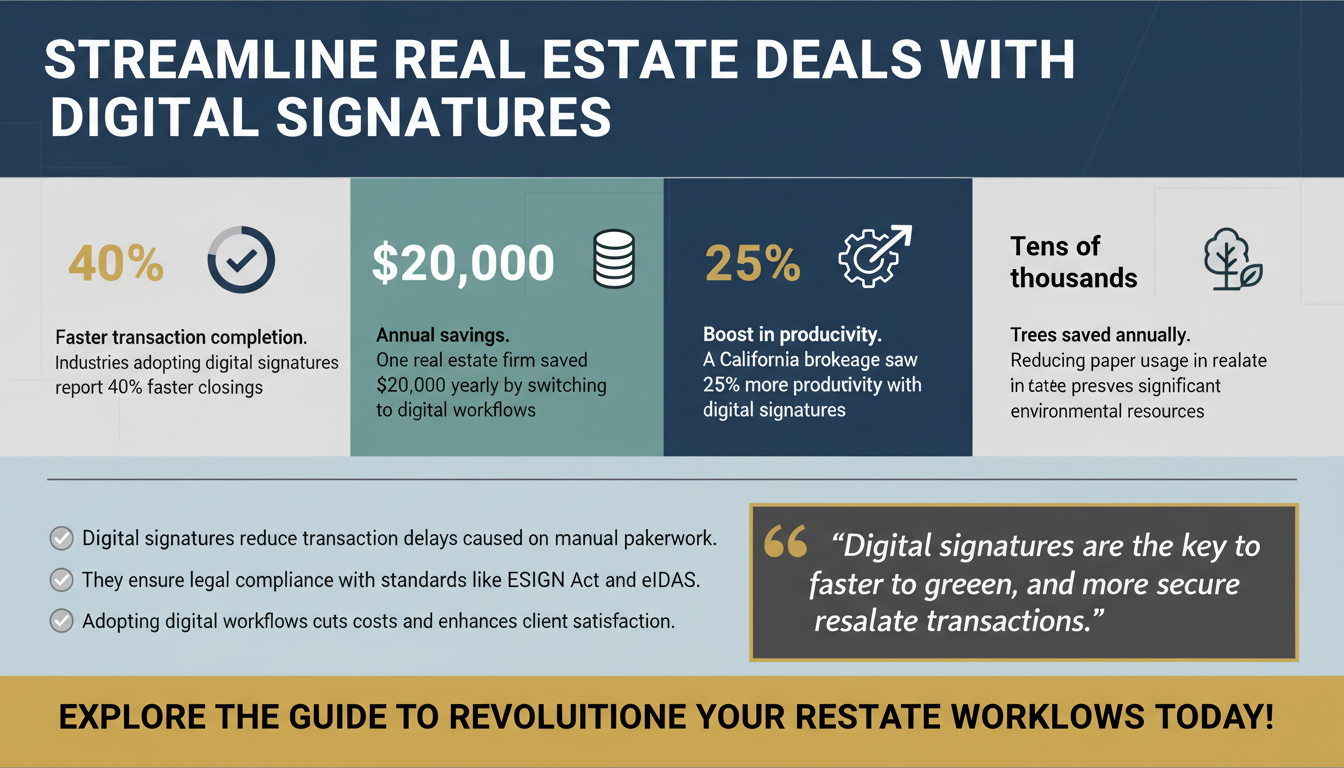
According to Gartner's 2026 market analysis, industries adopting digital signature technology report a 40% reduction in transaction completion times. In real estate, this means faster closings, improved client satisfaction, and fewer lost deals caused by procedural delays.
Key Benefits of Digital Signatures
Enhanced Security: Digital signatures employ encryption and authentication protocols, ensuring the integrity and confidentiality of documents. For example, platforms like DocuSign use advanced tamper-proof technology to guarantee that signed documents remain unchanged after completion.
Legal Compliance: Digital signatures adhere to global standards such as the U.S. ESIGN Act and Europe’s eIDAS regulation, making them legally binding in most jurisdictions. This is particularly crucial for real estate firms operating across state or national borders, where compliance is non-negotiable.
Cost Savings: By replacing paper-based processes, agencies save on printing, courier, and document storage expenses. For instance, a real estate firm in Texas reported reducing their annual operational costs by $20,000 after transitioning to digital workflows.
Environmental Impact: Reducing paper usage aligns with eco-conscious practices, an increasingly important factor for many clients. A study by the Environmental Paper Network estimates that eliminating paper-based processes in real estate could save tens of thousands of trees annually.
Pro Tip: Use Analytics to Quantify Impact
Many digital signature platforms provide analytics tools that track metrics such as time saved, client adoption rates, and cost reductions. Use these insights to justify the investment in digital solutions to stakeholders and continually optimize your workflows.
For instance, a brokerage firm in California reported saving nearly $15,000 annually on printing costs alone after switching to digital signatures. Additionally, the firm experienced a 25% increase in productivity due to reduced administrative burdens.

The above image illustrates the time saved at each stage when transitioning from paper-based workflows to digital signature workflows.
Understanding the Digital Signature Workflow for Real Estate Professionals
To fully utilize digital signatures, agents and brokers must grasp the workflow involved. Below is a four-step process tailored specifically for real estate transactions:
Step 1: Document Preparation
Begin by digitizing all necessary documents, such as property disclosures, sales contracts, and financing agreements. Tools like Adobe Acrobat or DocuSign's PDF editor simplify the process of converting paper documents into digital formats. Additionally, ensure that all documents are properly organized and labeled for easier retrieval.
For example, a real estate agent handling multiple transactions can group documents by client or property to streamline operations. Beyond organization, consider creating templates for frequently used documents, which can save significant time when dealing with repetitive transactions.
Pro Tip: Adopt a naming convention for your digital files. For instance, use formats like "[ClientName_PropertyAddress_Date].pdf" to make retrieval and sharing more intuitive.
Step 2: Integration with Digital Signature Platforms
Select a digital signature platform that integrates seamlessly with your existing tools, such as CRM systems, transaction management software, or cloud storage solutions. Platforms like Zignature or DocuSign offer robust integration capabilities designed for real estate workflows.
Integration ensures that you can track document status, send reminders, and manage client communication from a single interface. Additionally, integration with cloud storage solutions like Google Drive or OneDrive allows for easy document sharing and ensures secure backups.
Step 3: Sending Documents for Signature
Upload the digitized documents to your chosen digital signature platform. Specify the signing order for clients, agents, or any additional stakeholders involved. Advanced platforms allow you to set deadlines, send automated reminders, and track progress in real time.
Advanced features like geolocation tracking can also be enabled to verify the location from which a document was signed, adding another layer of security.
Step 4: Verification and Archiving
Once signed, the platform generates an audit trail to confirm compliance with legal standards. Documents can then be securely stored in cloud-based repositories like Google Drive or Dropbox for future reference. Many platforms also allow for automated archiving into user-specified folders, further simplifying the process.
Secure archiving is particularly useful for brokers managing long-term leases or contracts that may require retrieval years later. For instance, a brokerage handling commercial leases stored digital contracts in encrypted databases, ensuring accessibility while maintaining data security over the long term.

The above diagram visually represents the digital signature workflow, including preparation, integration, signing, and archiving stages.
Top Features to Look for in a Digital Signature Solution
Not all digital signature solutions are created equal. Real estate professionals should prioritize platforms that meet industry-specific needs. Here are the must-have features:
Mobile Accessibility
Real estate agents often work outside the office. A mobile-friendly platform allows both agents and clients to sign documents on the go, whether via smartphones or tablets. For example, platforms like PandaDoc offer dedicated mobile apps with full functionality.
Multi-Language Support
For international transactions or diverse clientele, platforms with multi-language capabilities are invaluable. Global real estate firms have successfully expanded their reach by utilizing these features. For instance, a luxury brokerage in Miami reported completing 30% more transactions with overseas buyers after adopting a platform with multi-language options.
Advanced Security Features
Look for encryption, two-factor authentication, and tamper-proof audit trails to ensure document integrity and compliance. These features are especially critical for large-scale commercial transactions where security breaches could result in significant financial losses.
Custom Branding
Branding the signing experience with your agency’s logo and colors enhances professionalism and builds trust with clients. This is particularly valuable for boutique and high-end real estate firms looking to differentiate themselves in a competitive market.
Integration Capabilities
Platforms like Zignature and Dotloop offer integrations with popular CRM tools like Salesforce and transaction management systems. By linking these platforms, agents can automate follow-ups and track each stage of the transaction in real time.
Expert Insight: Test Before You Invest
"Before committing to a digital signature platform, make use of free trials offered by most providers. This not only helps you evaluate the user interface but also ensures compatibility with your existing tools," says Sarah Johnson, a tech consultant specializing in real estate solutions.
For example, an agency in New York increased its client satisfaction score by 20% after adopting a branded digital signature platform with mobile accessibility.

Overcoming Common Challenges in Adoption
Despite the benefits, adopting digital signatures may face resistance. Understanding these challenges and addressing them proactively can smooth the transition:
Resistance to Change
Agents accustomed to traditional methods may be skeptical of new technologies. Provide clear training sessions that illustrate the time and cost savings of digital signatures. Offer hands-on workshops or webinars to demonstrate how digital signatures work in practice.
Pro Tip: Highlight success stories from within your team or the broader industry to build confidence among hesitant staff members.
Compliance Concerns
Uncertainty about the legal validity of digital signatures is common. Educate your team on laws like the ESIGN Act and provide access to legal resources that confirm compliance. Partnering with a reputable legal advisor can also help address specific concerns.
Client Hesitation
Some clients may be unfamiliar with digital signing. Offer a guided experience, such as step-by-step instructions or video tutorials, to make the process user-friendly. Additionally, consider offering a hybrid option where clients can choose between digital and paper-based signatures.
For example, a brokerage in Texas addressed client concerns by hosting webinars explaining the security and convenience of digital signatures. This initiative increased client adoption rates by 35%.

How Digital Signatures Improve the Client Experience
Modern clients expect convenience, speed, and transparency. Digital signatures deliver all three:
Convenience
Clients can sign documents from their smartphones, tablets, or laptops, eliminating the need for in-person meetings or mailing physical copies. This flexibility is especially valuable for out-of-town buyers or investors.
Transparency
Advanced platforms provide real-time progress tracking, allowing clients to see the status of their documents at any time. This level of transparency fosters trust and reduces the need for constant follow-ups.
Pro Tip: Use email or SMS notifications to keep clients informed at every stage of the signing process.
Environmental Impact
Digital signatures reduce paper waste, appealing to eco-conscious clients and aligning with sustainable practices. A survey by the National Association of Realtors found that 65% of buyers under 35 prefer working with eco-friendly agencies.
According to Statista's 2026 report, 78% of clients prefer working with agencies that use digital signatures due to faster processing times and greater convenience.

Integrating Digital Signatures with Real Estate Technology
Digital signatures become exponentially more powerful when integrated into your tech stack. Here’s how:
CRM Integration
Sync digital signature platforms with tools like Salesforce or HubSpot to streamline communication and client tracking. For example, automated follow-ups can be triggered as soon as a document is signed, reducing delays in closing.
Transaction Management Systems
Platforms like Dotloop and SkySlope can be enhanced with digital signature features for better workflow automation. This integration allows agents to manage everything from listing agreements to closing documents in a single system.
Cloud Storage
Use services like Google Drive or Dropbox for secure storage and sharing of signed documents. Cloud storage also makes it easier to collaborate with team members and clients, regardless of their location.
For example, a Florida-based agency integrated its digital signature platform with its CRM, reducing administrative tasks by 40% and increasing deal closure rates by 15%.
Case Studies: Success Stories from Real Estate Professionals
Real-world examples highlight the tangible benefits of digital signatures:
Case Study 1: Residential Sales
An agent at a boutique firm reduced contract processing time by 50% using Zignature's platform, enabling her to close more deals and boost annual earnings. This improvement freed up more time for client acquisition and property marketing efforts.
Case Study 2: Commercial Leasing
A broker specializing in commercial properties integrated digital signatures with his CRM, resulting in faster lease approvals and improved client retention rates. By automating the signing process, he saved over 200 hours annually in administrative work.
Case Study 3: International Transactions
A luxury agency employed multi-language support for overseas buyers, increasing their global footprint and revenue. Clients from non-English-speaking countries reported higher satisfaction due to the platform’s user-friendly interface.
FAQ: Common Questions About Digital Signatures in Real Estate
Are digital signatures legally binding?
Yes, digital signatures are legally binding under laws such as the ESIGN Act in the U.S. and eIDAS in the EU. These regulations ensure that electronic signatures carry the same weight as traditional handwritten signatures.
How secure are digital signatures?
Digital signatures use encryption and authentication protocols to ensure document integrity and prevent tampering. Leading platforms also provide audit trails to document every step of the signing process.
Can digital signatures be used for all types of real estate transactions?
Absolutely. From residential sales to commercial leases, digital signatures streamline all transaction types. Their flexibility makes them suitable for everything from single-family home purchases to complex multi-property deals.
What happens if a client prefers paper-based signatures?
Platforms like Zignature accommodate hybrid workflows, allowing for both digital and manual signing options. This ensures that you can cater to clients who are resistant to adopting new technologies.
How do I choose the right digital signature platform?
Consider factors such as security features, integration capabilities, and client support. View our top 10 questions to ask.
Conclusion: Transform Your Real Estate Workflow Today
Digital signatures are no longer optional—they’re essential for modern real estate professionals. By streamlining workflows, enhancing security, and improving client experiences, this technology positions agents and brokers for success in a competitive market.
Ready to take the next step? Explore Zignature's features, or check out complementary tools like Apparatuz for workflow automation and Schedly for appointment management. Together, these solutions create a comprehensive ecosystem for efficiency and growth.