
Introduction: The Need for Secure Document Collaboration
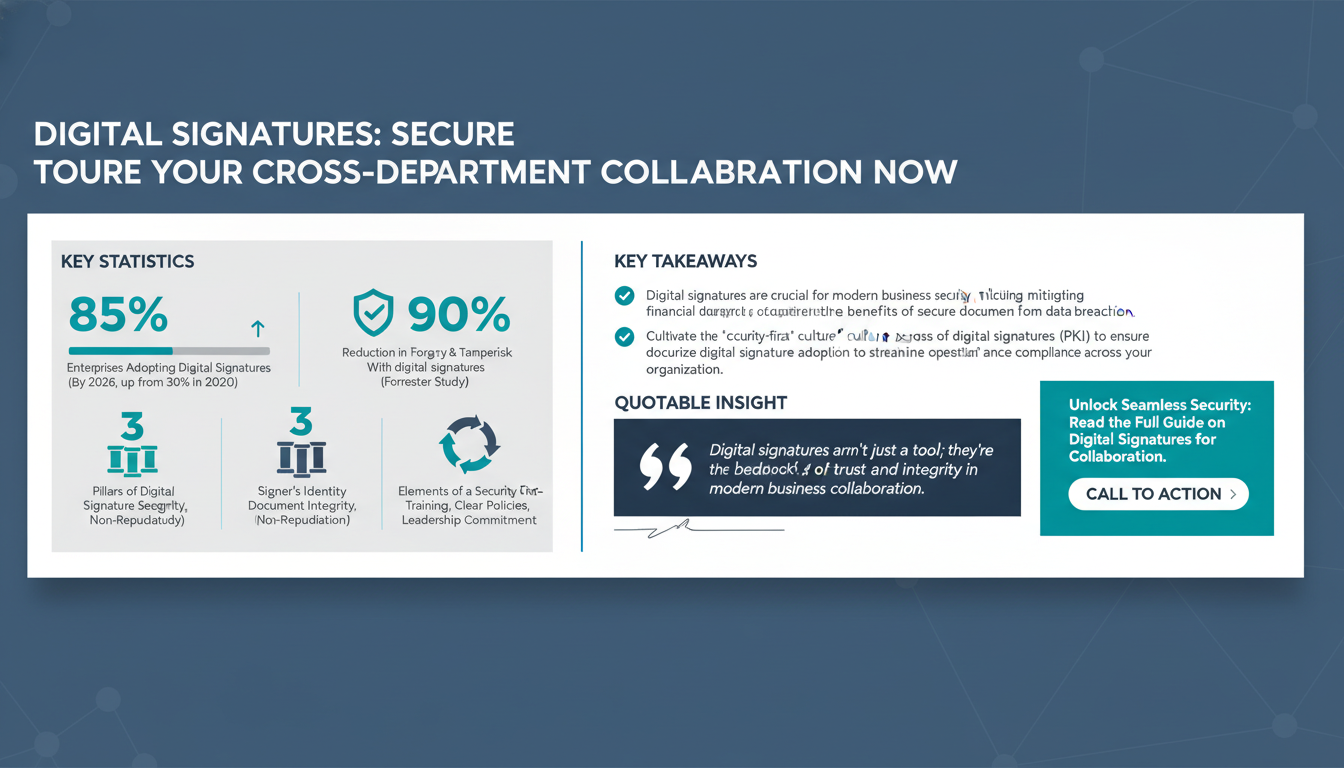
In today's interconnected business environment, the ability to efficiently and securely share documents across departments is paramount. Companies are increasingly adopting digital solutions to streamline operations, and digital signatures are at the forefront of this transformation. According to a Gartner report, over 85% of enterprises will have integrated some form of digital signature solution by 2026, a massive jump from just 30% in 2020. This shift is driven by the need for increased security, improved compliance, and enhanced collaboration capabilities.
The challenge, however, lies in ensuring that these digital tools are both secure and effective across different departments. Traditional document management systems often fall short in providing the necessary security and efficiency needed for modern business demands. This article will explore how digital signatures can facilitate secure cross-department document collaboration, highlighting best practices and common pitfalls to avoid.
As we delve deeper, we'll uncover proprietary frameworks like Zignature's "SecureCollab Protocol" and provide actionable insights that empower businesses to harness the full potential of digital signatures. Whether you're in legal, finance, or healthcare, the principles discussed will be universally applicable, ensuring robust document security and seamless collaboration across your organization.
Moreover, the importance of secure document collaboration cannot be overstated. In a world where data breaches are becoming increasingly common, businesses that fail to adopt secure digital signature solutions risk not only financial loss but also reputational damage. A well-implemented digital signature strategy can mitigate these risks, safeguarding sensitive information and fostering trust among stakeholders.
Pro Tip: Fostering a Security-First Culture
To truly benefit from secure document collaboration, it's essential to cultivate a culture that prioritizes security at every level of the organization. This involves regular training sessions, clear communication of security policies, and a commitment from leadership to uphold these standards. A security-first culture not only protects sensitive information but also builds trust with clients and partners, positioning the company as a reliable and forward-thinking entity.
Understanding the Basics of Digital Signatures
Digital signatures are more than just electronic scribbles on a document; they are cryptographic mechanisms that ensure the authenticity and integrity of a document. As defined by the National Institute of Standards and Technology (NIST), a digital signature is a mathematical scheme for verifying the authenticity of digital messages or documents. At its core, it involves three key components: the signer's identity, the document's integrity, and the non-repudiation of the transaction.
The process begins with the creation of a hash value, a unique digital fingerprint of the document. This hash is then encrypted with the signer's private key to create the digital signature. Upon receipt, the recipient can use the signer's public key to decrypt the hash and verify the document's integrity and the signer's identity. This provides a robust framework for ensuring that documents have not been altered and that the signer's identity is authentic.
Digital signatures provide a high level of security compared to traditional paper-based methods. According to a Forrester study, digital signatures reduce the risk of forgery and tampering by 90%. This makes them an essential tool for businesses looking to enhance document security and streamline cross-department collaborations.
Expert Insight: The Role of Cryptography in Digital Signatures
Cryptography is the backbone of digital signatures, providing the mathematical framework that ensures their security. The use of public key infrastructure (PKI) is critical in this process. PKI not only facilitates the creation and verification of digital signatures but also underpins secure communications over the internet. Businesses leveraging PKI can ensure that their digital signatures are not just secure but also trusted by recipients, providing peace of mind in transactions.
Furthermore, digital signatures also offer significant time and cost savings. Traditional document handling can be cumbersome and prone to delays, especially when documents need to be signed by multiple parties in different locations. Digital signatures expedite this process, enabling real-time signing and verification, which enhances overall organizational efficiency.

Diagram showing the digital signature process, including hashing, encryption, and verification steps with labeled components.
The SecureCollab Protocol: A Proprietary Framework for Document Collaboration
Zignature's SecureCollab Protocol is a proprietary framework designed to ensure secure and seamless document collaboration across departments. This framework is built on four pillars: Authentication, Authorization, Data Integrity, and Auditability.
Authentication ensures that only authorized users can access and sign documents. This is achieved through multi-factor authentication (MFA), which combines something the user knows (password), something the user has (smartphone), and something the user is (biometrics). According to CSO Online, implementing MFA can prevent up to 99.9% of account compromise attacks.
Authorization involves setting permissions and roles for users within the organization. By defining who can view, edit, and sign documents, businesses can prevent unauthorized access and ensure that only relevant parties are involved in the document workflow.
Pro Tip: Tailoring Authorization Levels
When setting up authorization levels, consider the principle of least privilege. This means granting users the minimum level of access necessary to perform their tasks. By doing so, you minimize the risk of data leaks and unauthorized document alterations, ensuring a more secure document management environment.
Data Integrity is maintained through robust encryption methods that protect documents during transmission and storage. This ensures that documents are not altered without detection.
Auditability provides a comprehensive trail of document interactions, allowing businesses to track who accessed and signed documents and when. This is crucial for compliance and accountability, especially in highly regulated industries like finance and healthcare.
Case Study: Implementing Auditability in Financial Services
A leading financial services company recently implemented the SecureCollab Protocol and found the auditability features particularly beneficial. By integrating comprehensive tracking and reporting tools, the company was able to reduce compliance audit times by 40%, providing faster responses to regulatory inquiries and enhancing internal accountability.
The SecureCollab Protocol is designed to be flexible and adaptable, allowing businesses to customize the framework to their specific needs. For example, a healthcare organization may prioritize data integrity and auditability to comply with HIPAA regulations, while a financial institution may focus on authentication and authorization to protect sensitive financial data.

Flowchart illustrating the SecureCollab Protocol with authentication, authorization, data integrity, and auditability stages visualized.
Integrating Digital Signatures Across Departments
The integration of digital signatures across departments requires a strategic approach that considers the unique needs of each department. Legal teams, for instance, prioritize compliance and confidentiality, while sales teams may focus on speed and efficiency.
To successfully implement digital signatures, businesses should start by conducting a thorough needs assessment for each department. This involves understanding current processes, identifying bottlenecks, and determining how digital signatures can address these challenges. A McKinsey report emphasizes the importance of aligning digital initiatives with business goals to maximize impact.
Checklist: Steps for Departmental Needs Assessment
- Identify key stakeholders in each department.
- Conduct workshops to map current document workflows.
- Analyze pain points and inefficiencies in existing processes.
- Determine compliance and security requirements specific to each department.
- Develop a tailored digital signature implementation strategy.
Once departmental needs are identified, organizations can develop a customized implementation plan. This plan should include selecting a suitable digital signature solution, training employees on its use, and establishing clear policies and procedures for document management and collaboration.
Cross-departmental collaboration is further enhanced by integrating digital signatures with existing enterprise systems, such as CRM and ERP platforms. This ensures a seamless flow of information and reduces the risk of errors and inefficiencies associated with manual document handling.
For instance, integrating digital signatures with a CRM system allows sales teams to quickly finalize contracts with clients, reducing turnaround times and enhancing customer satisfaction. Similarly, integration with an ERP system can streamline procurement processes by ensuring that purchase orders are promptly approved and processed.
Expert Insight: Maximizing CRM and ERP Integration
When integrating digital signatures with CRM and ERP systems, it's crucial to leverage automation capabilities. Automated workflows can trigger alerts for pending signatures, automatically update record status, and generate reports, enhancing overall operational efficiency and reducing manual oversight.

Cross-departmental integration diagram showing interconnected departments with digital signature workflows integrated with CRM and ERP systems.
Ensuring Compliance and Legal Validity
One of the primary concerns for businesses adopting digital signatures is ensuring compliance with legal and regulatory requirements. Digital signatures must adhere to standards such as the Electronic Signatures in Global and National Commerce Act (ESIGN Act) in the US and the eIDAS Regulation in the EU.
These standards provide a legal framework that ensures digital signatures are legally binding and enforceable. To comply, businesses must ensure that their digital signature solutions meet specific criteria, including identity verification, signature integrity, and record retention.
Working with a reputable digital signature provider like Zignature ensures that businesses remain compliant with these regulations. Zignature's solutions are designed to meet global legal standards, providing businesses with the confidence that their digital transactions are secure and legally valid.
Legal Checklist: Ensuring Compliance with ESIGN and eIDAS
- Verify the identity of all signers using robust authentication methods.
- Ensure the integrity of the signed document with secure cryptographic techniques.
- Maintain comprehensive audit trails of all signed documents.
- Regularly update digital signature policies to align with new regulations.
Furthermore, businesses should regularly review and update their digital signature policies to align with evolving regulations and best practices. This proactive approach not only ensures compliance but also enhances the organization's reputation and trustworthiness.
In industries such as finance and healthcare, where stringent regulations govern data handling and privacy, compliance is not just a legal requirement but also a competitive advantage. By demonstrating a commitment to compliance, businesses can differentiate themselves in the marketplace and build trust with clients and partners.
Compliance checklist visual with key regulatory standards such as ESIGN and eIDAS highlighted, showing steps for legal validation.
Enhancing Security with Advanced Encryption Technologies
Security is a critical aspect of digital signatures, and advanced encryption technologies play a vital role in protecting sensitive information. Digital signature solutions typically employ asymmetric encryption, which uses a pair of keys—a public key for encryption and a private key for decryption.
This method ensures that even if a document is intercepted during transmission, it cannot be decrypted without the private key. To further enhance security, leading solutions like Zignature employ additional measures such as end-to-end encryption and secure hash algorithms (SHA-256).
According to a SecurityWeek article, end-to-end encryption is one of the most effective ways to secure data against unauthorized access. This level of protection is particularly important for industries dealing with highly sensitive information, such as healthcare and finance.
Pro Tip: Staying Updated with Encryption Practices
Encryption technologies are constantly evolving. It's essential for businesses to stay informed about new developments and updates in encryption standards. Regularly consulting with cybersecurity experts and participating in industry forums can provide valuable insights and help ensure that your encryption practices remain robust and up-to-date.
Businesses should also implement regular security audits and vulnerability assessments to identify and mitigate potential risks. These audits help ensure that the digital signature solution remains secure against evolving cyber threats.
Additionally, organizations should stay informed about the latest developments in encryption technology to ensure their systems are equipped to handle emerging threats. By staying ahead of the curve, businesses can protect their data and maintain the trust of their stakeholders.

Encryption workflow visual showing asymmetric encryption with public and private key usage, including steps of key generation, encryption, and decryption.
Facilitating Seamless Integration with Existing Systems
For digital signatures to be effective, they must integrate seamlessly with existing systems and workflows. This integration eliminates silos and enhances the overall efficiency of document collaboration processes.
Organizations should choose digital signature solutions that offer robust APIs and integration capabilities with popular enterprise applications such as Salesforce, Microsoft Office, and Google Workspace. These integrations ensure that users can sign documents directly within their existing tools, reducing the need for manual data entry and minimizing errors.
Checklist: Evaluating Digital Signature Integration Capabilities
- Ensure compatibility with existing CRM and ERP systems.
- Check for API support and ease of integration with third-party applications.
- Assess the ability to automate workflows for document management.
- Consider user-friendly features for easy adoption by employees.
According to Forbes Tech Council, seamless software integration is a key driver of productivity and innovation, enabling businesses to leverage the full potential of their technology investments.
Additionally, automated workflows can be set up to trigger actions based on document status, such as sending notifications when a document is signed or automatically routing signed documents to relevant parties.
For example, a real estate firm can use digital signatures to streamline the property sale process. Once a purchase agreement is signed, the document can be automatically routed to the finance department for processing, reducing delays and ensuring a smooth transaction.
Expert Insight: Leveraging Automation for Efficiency
Automation is a powerful tool in document management. By automating routine tasks such as document routing and notifications, businesses can significantly reduce manual labor and improve accuracy. This not only speeds up processes but also frees up employees to focus on more strategic tasks, enhancing overall productivity and job satisfaction.
Integration diagram showing digital signature solution connected with CRM, ERP, and office tools, demonstrating automation triggers and seamless workflows.
Overcoming Common Challenges in Cross-Department Document Collaboration
Despite the numerous benefits of digital signatures, organizations may encounter challenges when implementing these solutions across departments. One common issue is resistance to change, as employees may be accustomed to traditional document handling methods.
To overcome this, businesses should invest in comprehensive training programs that educate employees on the benefits and ease of use of digital signatures. According to a Harvard Business Review article, effective change management strategies are essential for successful technology adoption.
Change Management Strategies for Digital Adoption
- Conduct workshops to demonstrate the benefits and functionality of digital signatures.
- Engage department champions to advocate and assist in the transition.
- Provide ongoing support and resources for employees adapting to new tools.
- Solicit feedback and make iterative improvements to the implementation process.
Another challenge is ensuring that all departments adhere to consistent document management practices. Establishing clear policies and procedures for document handling, storage, and collaboration can mitigate this issue.
Finally, businesses must address any technical challenges that arise during integration. Partnering with a reliable digital signature provider like Zignature can help organizations navigate these challenges and ensure a smooth implementation process.
Moreover, fostering a culture of innovation and continuous improvement can help organizations overcome resistance to change. By encouraging employees to embrace new technologies and providing them with the necessary support, businesses can create an environment where digital transformation thrives.
Pro Tip: Cultivating a Culture of Continuous Improvement
Encourage feedback loops and iterative improvements in technology adoption processes. Regularly review the effectiveness of digital signature implementations and be open to making adjustments based on user feedback. This approach not only enhances the user experience but also ensures that the technology evolves in alignment with business needs.
Change management visual showing training program stages, employee engagement strategies, and technology adoption pathways.
Conclusion: The Future of Secure Document Collaboration
As businesses continue to evolve and embrace digital transformation, the role of digital signatures in secure document collaboration will only grow. By leveraging solutions like Zignature, organizations can enhance security, improve efficiency, and ensure compliance with legal standards.
To fully realize the benefits of digital signatures, businesses should focus on integrating these solutions across departments, ensuring seamless workflows, and overcoming challenges with strategic change management. As highlighted in this article, digital signatures are not just a technological upgrade; they are a strategic investment in the future of business operations.
For businesses looking to further optimize their processes, consider exploring complementary tools like Apparatuz for workflow automation, or Applicantz for recruitment management. Together, these solutions create a comprehensive ecosystem for secure and efficient business operations.
Expert Insight: Preparing for Future Innovations
Stay ahead in the rapidly evolving digital landscape by continually assessing emerging technologies and trends. Innovations such as blockchain for document verification and AI-driven analytics can further enhance the capabilities of digital signature solutions, offering even greater security and efficiency in document collaboration.
By embracing digital signatures and related technologies, organizations can position themselves at the forefront of innovation, ensuring long-term success in a rapidly changing business landscape.
FAQ: Common Questions About Digital Signatures and Document Collaboration
How do digital signatures differ from electronic signatures? Digital signatures use cryptographic methods to ensure document authenticity and integrity, while electronic signatures are a broader category that may not include such security measures.
Are digital signatures legally binding? Yes, digital signatures are legally binding in most jurisdictions if they meet certain criteria, such as identity verification and adherence to legal standards like the ESIGN Act.
What industries benefit most from digital signatures? Industries such as finance, healthcare, legal, and real estate benefit greatly due to the need for secure, efficient document handling and compliance with regulatory requirements.
How can I ensure my digital signature solution remains secure? Regularly update your solution, conduct security audits, and work with a reputable provider that adheres to industry best practices and standards.
How can I integrate digital signatures with my existing systems? Choose a solution that offers robust API integration capabilities and can easily connect with your CRM, ERP, and other enterprise tools.