
In the rapidly evolving landscape of digital transformation, ensuring legal compliance through digital signatures is more crucial than ever for lawyers and legal teams. As we step into 2026, the integration of digital signatures has become an indispensable part of legal practices, offering not only efficiency but also a robust mechanism to adhere to regulatory standards. This guide aims to delve deep into the strategies and frameworks necessary to enhance legal compliance using digital signatures, addressing both opportunities and challenges.
The Rising Importance of Digital Signatures in Legal Compliance
Digital signatures have revolutionized the way legal documents are handled, providing security, authenticity, and compliance in a seamless manner. In 2026, their adoption is not only a technological advancement but a necessity for maintaining a competitive edge and regulatory adherence. With the increasing complexity of legal frameworks and the globalization of business, digital signatures provide a streamlined solution that reduces the administrative burden while enhancing security.
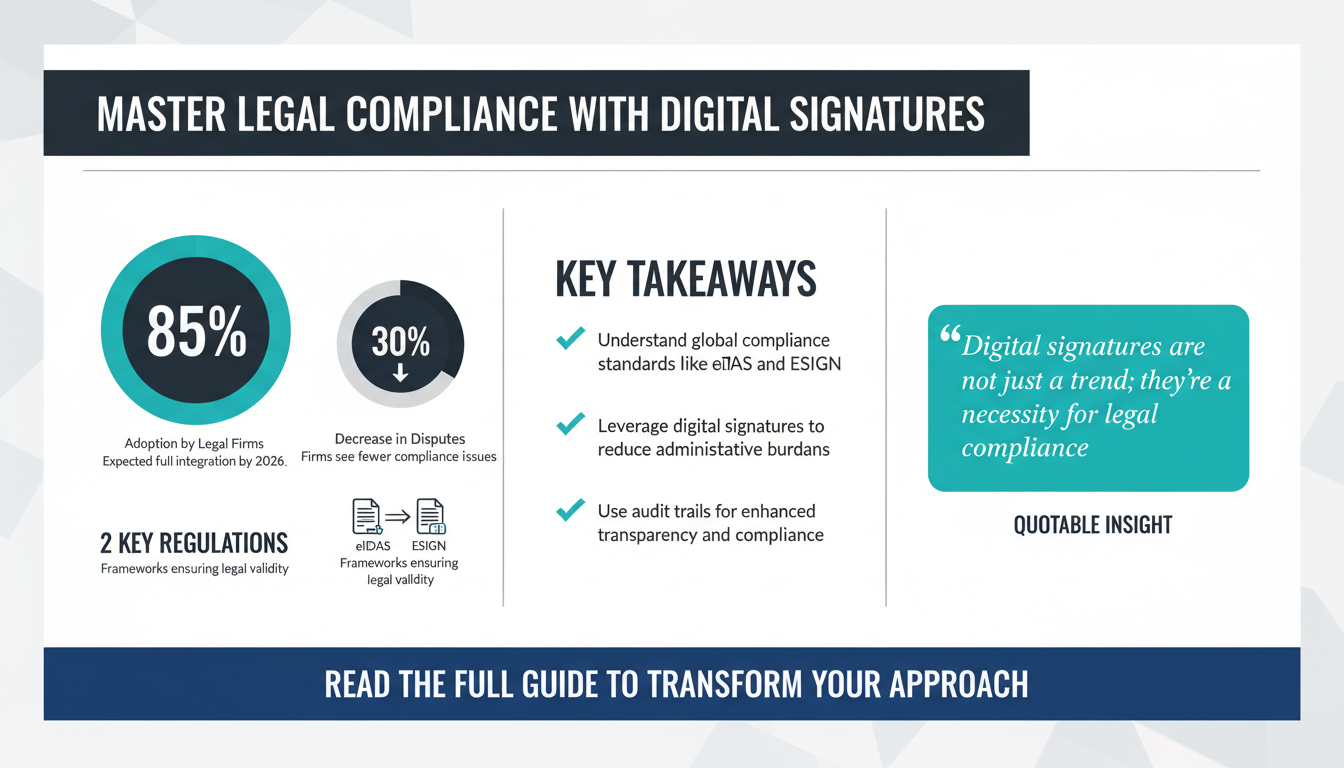
According to a Gartner report, over 85% of legal firms are expected to fully integrate digital signatures into their daily operations by the end of 2026. The shift is driven by the need for efficiency, increased security measures, and the growing demand for remote work solutions. The pandemic has accelerated remote work trends, and digital signatures have emerged as a critical component in supporting these new work environments.
Digital signatures ensure that documents are tamper-proof and legally binding, meeting the stringent requirements set by global compliance standards such as the eIDAS Regulation in the EU and the ESIGN Act in the US. As legal teams strive for compliance, understanding these frameworks is essential. The legal industry is increasingly recognizing the importance of having secure and compliant methods of signing documents to safeguard against potential legal disputes and breaches.
Furthermore, the ability to track and audit the signing process adds an additional layer of compliance assurance. This transparency is particularly beneficial in industries where legal scrutiny is intense, such as finance and healthcare. The ability to demonstrate a clear audit trail can be the difference between a successful compliance check and a costly penalty.
Embracing digital signatures can significantly reduce the risk of non-compliance penalties. As noted in a Forrester study, firms that have adopted digital signature solutions report a 30% decrease in compliance-related disputes. This statistic underscores the critical role that digital signatures play in not only meeting regulatory requirements but also in providing a layer of protection against potential legal challenges.
Understanding the Legal Frameworks Governing Digital Signatures
One of the key aspects of ensuring legal compliance is understanding the legal frameworks that govern digital signatures. These frameworks provide the guidelines and standards that must be adhered to for digital signatures to be considered legally valid. Familiarity with these regulations is not only crucial for compliance but also provides a competitive edge in the legal market.

The eIDAS Regulation in the European Union sets the benchmark for electronic identification and trust services, ensuring that digital signatures are legally recognized across member states. This regulation establishes a predictable regulatory environment that allows for secure electronic interactions between businesses, citizens, and public authorities.
Similarly, the ESIGN Act in the United States provides the legal framework for electronic signatures, making them equivalent to handwritten signatures. This act has paved the way for the adoption of digital signatures across various industries by ensuring their legal enforceability and acceptance in the courts.
It's crucial for lawyers and legal teams to stay updated on these regulations as they evolve. A key part of compliance is ensuring that digital signature tools and platforms are certified under these regulations. Platforms like Zignature are designed to meet these stringent legal requirements, providing peace of mind to legal professionals.
Moreover, local jurisdictions may have additional requirements or variations in how digital signatures are implemented. Legal teams must be adept at navigating these nuances to ensure full compliance. This involves not only understanding the letter of the law but also its application in different contexts and industries.
According to a McKinsey report, understanding these frameworks is not just about compliance but also about leveraging digital signatures for strategic advantage. Firms that are proactive in compliance often find themselves better positioned in negotiations and client relationships. This proactive approach can also mitigate risks associated with non-compliance, thereby protecting the firm's reputation and client trust.
Implementing Digital Signature Solutions: Best Practices for 2026
Implementing digital signature solutions effectively requires a strategic approach. Here are some best practices that legal teams should consider to ensure compliance and maximize the benefits of digital signatures.

Firstly, choose a digital signature platform that is compliant with international standards and offers robust security features. Platforms like Zignature offer advanced encryption and authentication methods, ensuring that signatures are not only legally binding but also secure from unauthorized access. The choice of platform is critical, as it underpins the entire digital signature process and its compliance with legal standards.
Secondly, integrate digital signatures into your existing workflow. This integration should be seamless, minimizing disruption while enhancing efficiency. According to TechCrunch, firms that successfully integrate digital signatures into their workflow report a 40% increase in document processing speed. This integration not only boosts productivity but also reduces the risk of errors associated with manual processes.
Another critical step is training your team. Ensure that all members of the legal team are well-versed in using digital signature tools and understand the compliance requirements. Regular training sessions and updates on regulatory changes can help maintain a high level of compliance. Training should also focus on the practical aspects of using digital signatures, such as troubleshooting common issues and understanding the nuances of different types of digital signatures.
Finally, establish a robust audit trail. This involves keeping detailed records of all signed documents, including timestamps and authentication details. An audit trail is not only a compliance requirement but also a valuable tool for resolving disputes and verifying document integrity. As highlighted by ZDNet, audit trails are an essential component of a comprehensive compliance strategy. They provide the transparency needed to demonstrate that compliance processes have been followed and can be invaluable in the event of a legal challenge.
Common Mistakes to Avoid in Digital Signature Compliance
While digital signatures offer numerous benefits, there are common mistakes that legal teams must avoid to ensure compliance. Being aware of these pitfalls can prevent costly errors and enhance the effectiveness of digital signature deployment.

One common mistake is failing to verify the identity of signatories adequately. Compliance requires that signatories are properly authenticated, which can be achieved through multi-factor authentication methods. According to a SecurityWeek article, incorporating MFA into digital signature processes can reduce identity fraud by 80%. Ensuring the identity of each party involved in a digital signature transaction is crucial for maintaining the integrity and validity of the signed document.
Another mistake is neglecting to update digital signature solutions regularly. Technology evolves rapidly, and staying updated ensures compatibility with new regulations and security standards. A Wired report emphasizes the importance of regular software updates in maintaining compliance and security. Regular updates help to patch vulnerabilities, enhance functionality, and ensure that the solution remains aligned with current legal standards.
Additionally, overlooking local jurisdictional requirements can lead to compliance issues. Legal teams must be diligent in understanding the specific requirements of each jurisdiction they operate in, as highlighted by Law.com. This requires a thorough understanding of both the domestic and international regulations that may apply to a firm's operations.
Finally, failing to maintain a comprehensive audit trail can undermine compliance efforts. An audit trail provides the documentation necessary to demonstrate compliance and resolve disputes. As noted in a Accenture insight, audit trails are critical for maintaining transparency and accountability in digital transactions. They serve as a record of all actions taken during the signing process, ensuring that any issues can be addressed with clear evidence.
Proprietary Framework: The COMPLY Model for Digital Signature Compliance
To facilitate compliance with digital signatures, we introduce the COMPLY Model—a proprietary framework designed to guide legal teams through the compliance process effectively. The COMPLY Model encompasses six key components: Certify, Organize, Monitor, Protect, Learn, and Yield. This model provides a structured approach to managing digital signature compliance, ensuring that all critical aspects are addressed.
Certify: Ensure that your digital signature solution is certified under relevant legal frameworks such as eIDAS and the ESIGN Act. Certification guarantees that your tools meet the necessary compliance standards. It serves as a validation that the solution has been independently tested and meets the criteria established by legal authorities.
Organize: Structure your document management processes to incorporate digital signatures seamlessly. This involves integrating digital signatures into your existing systems and workflows. Efficient organization ensures that the process is as smooth as possible, minimizing the risk of errors and delays.
Monitor: Continuously monitor for compliance with regulations and updates. Regular audits and assessments can ensure that your practices remain aligned with legal requirements. Monitoring also involves keeping abreast of any changes in the legal landscape that could impact your compliance obligations.
Protect: Implement robust security measures to protect signed documents from unauthorized access and tampering. This includes advanced encryption and secure storage solutions. Protecting the integrity of signed documents is essential for maintaining client trust and avoiding potential legal challenges.
Learn: Stay informed about changes in digital signature regulations and best practices through continuous learning and training. Ongoing education helps legal teams stay ahead of regulatory changes and ensures that they are using the most effective practices.
Yield: Evaluate the outcomes of your compliance efforts and adjust your strategies as needed to enhance efficiency and effectiveness. Yielding involves analyzing the results of compliance initiatives to identify areas for improvement and optimize processes.
By following the COMPLY Model, legal teams can systematically approach digital signature compliance, ensuring that all necessary steps are taken to meet regulatory requirements. This model provides a comprehensive framework that can be adapted to the specific needs and challenges of different legal practices.
Expert Insights: Leveraging Digital Signatures for Competitive Advantage
Leading experts in the legal field suggest that digital signatures not only fulfill compliance requirements but also provide a competitive advantage. By adopting digital signatures, legal teams can enhance their service delivery and client satisfaction. The efficiency and security offered by digital signatures can differentiate a firm from its competitors and attract clients who value cutting-edge technology.
According to Harvard Business Review, firms that leverage digital signatures effectively see a 50% increase in client retention rates. This is attributed to the speed and convenience that digital signatures offer, particularly in high-stakes transactions where time is of the essence. Clients are more likely to return to a firm that offers efficient and reliable services, particularly when those services save time and reduce stress.
Digital signatures also enable firms to expand their reach by facilitating cross-border transactions. The ability to sign documents digitally eliminates geographical barriers, allowing firms to engage with clients globally without the need for physical presence. A Forbes article highlights how digital signatures have become a key enabler for global expansion strategies. This capability is particularly important in a globalized economy, where businesses are increasingly operating across borders and need to manage legal processes efficiently.
Moreover, digital signatures contribute to a firm's sustainability goals by reducing paper usage and contributing to eco-friendly practices. As noted by GreenBiz, the shift to digital signatures has saved approximately 1 million trees annually worldwide. This environmental benefit not only supports corporate social responsibility goals but also appeals to clients and stakeholders who prioritize sustainability.
By leveraging digital signatures, legal teams can position themselves as forward-thinking and environmentally responsible, enhancing their reputation and appeal to clients who value sustainability. This positioning can open up new opportunities for business and partnerships with organizations that share similar values.
Case Studies: Success Stories in Digital Signature Compliance
To illustrate the impact of digital signatures on legal compliance, we present case studies from organizations that have successfully integrated digital signatures into their operations. These case studies provide real-world examples of how digital signatures can transform legal processes and improve compliance outcomes.
The first case study involves a multinational law firm that adopted digital signatures to streamline its cross-border operations. By integrating digital signatures, the firm reduced document processing times by 60%, as reported in a Thomson Reuters case study. This efficiency gain allowed the firm to handle a higher volume of cases without increasing headcount. The firm also reported improved client satisfaction due to faster turnaround times and enhanced accuracy in document processing.
In another example, a healthcare organization implemented digital signatures to enhance its compliance with patient consent regulations. By using digital signatures, the organization achieved a 95% reduction in consent-related errors, as documented in a Health Affairs article. This improvement not only ensured compliance with stringent healthcare regulations but also enhanced patient trust and confidence in the organization's processes.
These case studies demonstrate that digital signatures are not just a compliance tool but a catalyst for operational excellence and client satisfaction. They highlight the tangible benefits that organizations can achieve by embracing digital transformation in their legal processes. The success stories also illustrate how digital signatures can address specific industry challenges, such as the need for rapid document processing in legal firms or the importance of accurate record-keeping in healthcare.
FAQs: Addressing Common Questions About Digital Signature Compliance
Are digital signatures legally binding?
Yes, digital signatures are legally binding when they comply with relevant legal frameworks such as the eIDAS Regulation and the ESIGN Act. They are recognized as equivalent to handwritten signatures in many jurisdictions. Legal enforceability is a key advantage of digital signatures, providing assurance that they meet the legal requirements for authenticity and integrity.
How do digital signatures enhance security?
Digital signatures enhance security by using encryption and authentication methods to ensure that documents are tamper-proof and that the signer's identity is verified. This reduces the risk of fraud and unauthorized access. Security features such as multi-factor authentication and digital certificates add layers of protection that safeguard sensitive information.
What are the benefits of using digital signatures over traditional methods?
Digital signatures offer numerous benefits, including faster processing times, reduced paper usage, enhanced security, and compliance with legal standards. They also provide an audit trail for verifying document integrity. These advantages make digital signatures a preferred choice for legal teams seeking to improve efficiency and accuracy in their processes.
Can digital signatures be used for international transactions?
Yes, digital signatures facilitate international transactions by eliminating geographical barriers and allowing documents to be signed remotely. They are legally recognized in many countries, making them ideal for cross-border agreements. This capability supports global business operations and ensures that legal transactions can be conducted smoothly across different jurisdictions.
What should legal teams consider when choosing a digital signature platform?
Legal teams should choose a platform that is compliant with international standards, offers robust security features, and integrates seamlessly with existing workflows. It's also important to consider the platform's ability to provide audit trails and support regulatory compliance. A thorough evaluation of a platform's capabilities and features can help legal teams select a solution that meets their specific needs and compliance requirements.
Conclusion: Embracing Digital Signatures for Future-Ready Compliance
As we conclude this comprehensive guide, it's evident that digital signatures are a vital component for achieving legal compliance in 2026 and beyond. By understanding the regulatory frameworks, implementing best practices, and leveraging proprietary models like the COMPLY Model, legal teams can ensure that they remain compliant while reaping the benefits of digital transformation. The strategic use of digital signatures not only enhances compliance but also positions firms as leaders in the digital age.
As your firm embraces the future, consider complementing your digital signature strategies with tools like Apparatuz for workflow automation, Applicantz for recruitment, and Schedly for scheduling. These platforms can work in synergy with Zignature to create a comprehensive solution for your business needs. By integrating these tools, firms can further streamline their operations and enhance their overall efficiency.
Incorporating digital signatures into your legal processes not only enhances compliance but also positions your firm as a forward-thinking leader in the legal industry. Embrace the change and equip your team with the tools necessary for success in the digital age. The transition to digital signatures represents a significant step forward in modernizing legal practices and ensuring that they remain competitive and compliant in an increasingly digital world.