
The employee exit process is one of the most critical yet overlooked workflows in many organizations. Managing resignations, terminations, and retirements effectively requires robust systems that ensure compliance, efficiency, and a positive offboarding experience. In 2026, digital signatures are emerging as a revolutionary tool for HR teams to streamline this complex process. This comprehensive guide explores how electronic signatures simplify offboarding workflows, enhance HR compliance, and improve operational efficiency.
The Role of Digital Signatures in Modern Offboarding
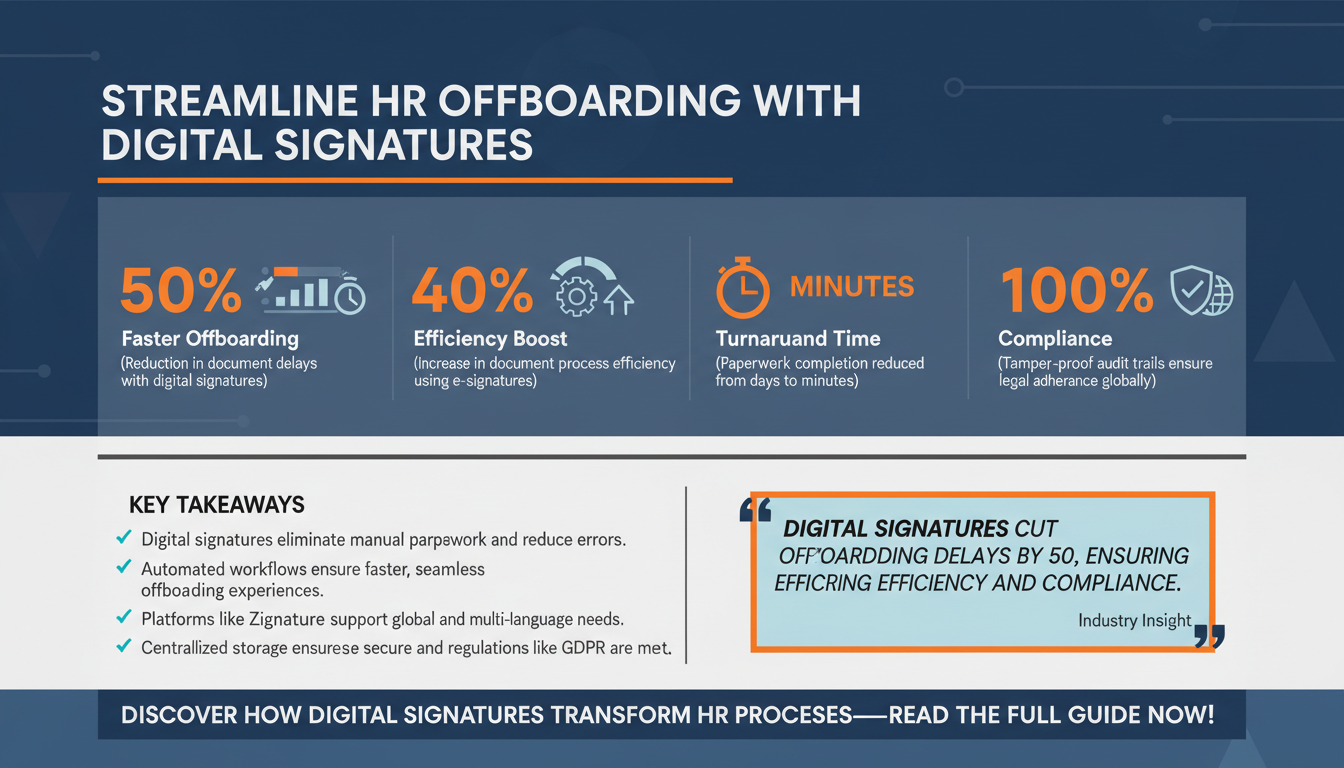
Digital signatures have radically transformed how HR teams manage offboarding workflows. They eliminate paper-based inefficiencies, reduce errors, and ensure legal compliance with employment regulations. According to a Forrester study, businesses leveraging digital signature solutions see a 50% reduction in document-related delays during offboarding processes.
These solutions enable quick and secure signing of termination letters, non-disclosure agreements (NDAs), and severance packages, reducing the turnaround time from days to minutes. By automating document workflows, HR teams can ensure that every step of the exit process is handled efficiently and with minimal friction.
Additionally, digital signatures ensure compliance with labor laws by maintaining tamper-proof audit trails for every signed document. This is particularly critical for organizations with cross-border operations, where regulations vary by jurisdiction. Using a digital signature platform like Zignature, HR teams can simplify compliance while providing employees with a seamless offboarding experience.
Key Benefits:
- Elimination of manual paperwork and delays
- Real-time tracking and notifications for document completion
- Comprehensive audit trails for legal compliance
How Digital Signatures Revolutionize Cross-Border Operations
For multinational companies, managing employee exits across different jurisdictions can be a logistical nightmare. Different countries have varying labor laws and documentation requirements. Digital signatures simplify this complexity by providing a universal, legally recognized method of signing documents. For example, the ESIGN Act in the United States and the eIDAS Regulation in Europe both validate digital signatures as legally binding, making them a reliable option for cross-border compliance.
Consider a scenario where an HR team in the United States needs to finalize the resignation of an employee based in Germany. Instead of mailing documents overseas or dealing with time zone differences, the HR team can use a digital signature platform to send, track, and archive the required documents instantly. This ensures efficiency and compliance while reducing the risk of delays or errors.
Pro Tip:
When selecting a digital signature platform, ensure it supports multi-language interfaces and regional compliance standards to accommodate global operations seamlessly.
Streamlining Employee Exit Documentation
One of the most time-consuming aspects of the employee exit process is managing documentation. From resignation letters to clearance forms, HR teams often face bottlenecks in ensuring documents are signed, reviewed, and archived correctly. Digital signatures simplify this process by automating document workflows and providing centralized storage solutions.
For example, an HR manager can create a resignation acceptance letter using a template within a digital signature platform. The system then sends the document to the employee for e-signature, tracks its status, and stores it securely in compliance with GDPR or other regulations. This reduces the risk of errors and ensures that no document is lost or forgotten.
According to Gartner research, organizations that adopt digital signature solutions experience a 40% increase in document process efficiency. Such improvements are invaluable during high-volume offboarding periods, such as seasonal layoffs or restructuring initiatives.
Common Mistakes to Avoid:
- Failing to use standardized templates for exit documents
- Neglecting to verify compliance requirements for signed documents
- Overlooking secure storage solutions for sensitive data
How Digital Signatures Improve Document Accessibility
Another significant advantage of digital signatures is the accessibility they provide. Traditional paper-based systems often require physical presence or postage for signing and delivering documents. In contrast, digital signatures allow employees and HR teams to access and complete documents from any location. This is especially important for remote employees or those who are traveling during their notice period.
Moreover, many digital signature platforms integrate with cloud storage solutions like Google Drive or Dropbox, making it easy to retrieve documents when needed. For instance, if an outgoing employee requests a copy of their signed termination agreement months after their departure, HR can quickly locate and share the document without sifting through physical files or outdated email threads.
Expert Insight:
"Centralized digital documentation not only speeds up offboarding but also enhances transparency and trust between employees and employers. Employees appreciate having easy access to their records, even after they leave the company." — John Miller, HR Operations Specialist
Ensuring Legal Compliance with Digital Signatures
Legal compliance is a cornerstone of effective HR management, particularly during employee exits. Digital signatures provide HR teams with tools to meet stringent regulatory requirements while protecting sensitive employee information. The tamper-proof nature of electronic signatures ensures that all signed documents are legally binding and admissible in court.
For instance, employment termination agreements signed digitally are compliant with e-signature laws such as the ESIGN Act in the United States and eIDAS Regulation in Europe. These frameworks provide clear guidelines on the validity and enforceability of digital signatures, making them ideal for HR applications.
A Deloitte report emphasizes that digital signatures reduce the risk of compliance violations by up to 70%. This is particularly critical for multinational organizations dealing with diverse regulatory landscapes. HR teams can ensure consistency and transparency by leveraging platforms that offer built-in compliance checks.
Quick Win:
Implement a digital signature solution with regional compliance support to ensure your employee exit processes are legally sound across all jurisdictions.
Addressing Data Security Concerns
Compliance isn’t just about legal requirements; it’s also about data security. Digital signature platforms use encryption and secure authentication methods to protect sensitive employee information. Multi-factor authentication (MFA) and role-based access controls ensure that only authorized individuals can view or sign documents.
For example, when an HR manager initiates a severance agreement, the platform can require the employee to verify their identity through a one-time password (OTP) sent to their mobile device. This added layer of security ensures that the document is signed by the correct individual, safeguarding against potential fraud.
Pro Tip:
Choose a digital signature platform that complies with ISO 27001 certification, which sets the gold standard for information security management systems.
Reducing Offboarding Timeframes
Time is of the essence during the employee exit process. Delays in signing and processing exit documents can disrupt operations and leave departing employees with a negative impression of the organization. Digital signatures expedite these workflows by enabling instant document approvals from remote locations.
Consider a scenario where an employee working remotely submits their resignation. Using a digital signature platform, the HR team can send all required documents—including resignation acceptance, clearance forms, and severance agreements—within minutes. The employee can review and sign these documents on any device, ensuring a smooth and time-efficient offboarding process.
According to HubSpot research, organizations adopting e-signature solutions reduce document processing times by 65%. Such efficiency not only benefits HR teams but also improves the overall employee experience during exits.
Key Takeaway:
Speeding up offboarding workflows enhances organizational agility while leaving departing employees with a positive final impression.
Checklist: Steps to Accelerate Offboarding with Digital Signatures
- Step 1: Use templates for common exit documents like NDAs and severance agreements.
- Step 2: Automate document distribution to departing employees via digital signature platforms.
- Step 3: Set up automated reminders for pending signatures to avoid delays.
- Step 4: Leverage real-time tracking to monitor document status and address bottlenecks promptly.
Enhancing Employee Experience During Exits
Employee exits can be emotionally charged events, especially in cases of layoffs or terminations. Digital signatures help HR teams provide a streamlined and empathetic offboarding experience by removing unnecessary friction. Departing employees appreciate quick and easy processes, which can mitigate potential negative feelings.
For example, offering mobile-friendly signing options allows employees to complete exit formalities from the comfort of their homes. This accessibility fosters goodwill and demonstrates respect for their time and convenience.
According to Gallup's research, organizations that prioritize seamless offboarding processes report higher employer brand ratings. Positive exit experiences also increase the likelihood of former employees becoming advocates for the company.
Expert Insight:
"A well-handled offboarding process can turn former employees into valuable brand ambassadors. Digital signatures play a crucial role in achieving this." — Sarah Thompson, HR Consultant
Integrating Digital Signatures with HR Systems
To maximize the benefits of digital signatures, HR teams must integrate these solutions with existing systems such as HRIS (Human Resource Information Systems) and ATS (Applicant Tracking Systems). This integration enables seamless workflows and centralized data management.
For instance, platforms like Zignature offer APIs that connect directly with popular HR software, automating the generation and tracking of exit documents. This eliminates the need for manual data entry and ensures consistency across systems.
A Nucleus Research study found that organizations leveraging API integrations for digital signatures saw a 25% increase in HR operational efficiency. Such integrations are particularly valuable for large enterprises handling high volumes of employee exits.
Quick Win:
Explore digital signature solutions that offer easy API integrations with your existing HR systems to streamline workflows.
Ensuring Data Consistency Across Platforms
One of the challenges of managing employee exits is maintaining consistent data across multiple platforms. Without integration, HR teams often need to manually input data into separate systems, increasing the risk of errors. Digital signature platforms resolve this by syncing data automatically with HRIS and payroll systems, ensuring a single source of truth for all employee records.
For example, when an employee signs their resignation letter digitally, the system can automatically update their status in the HRIS and initiate other offboarding tasks, such as revoking system access or scheduling an exit interview. This level of automation reduces administrative overhead and improves data accuracy.
Measuring Success: KPIs for Digital Signature Implementation
To evaluate the impact of digital signatures on employee exit processes, HR teams must track key performance indicators (KPIs). These metrics provide actionable insights into efficiency, compliance, and employee satisfaction.
- Document Turnaround Time: Measure the average time taken to complete and archive exit documents.
- Compliance Rate: Assess the percentage of documents meeting legal standards.
- Employee Satisfaction Score: Use surveys to gauge departing employees' experiences.
According to Capterra research, organizations using digital signature solutions report a 30% improvement in HR KPIs within the first year of implementation.
Key Takeaway:
Tracking KPIs ensures continuous improvement and highlights areas for optimization in your offboarding workflows.
Checklist: Key Metrics to Monitor
- Time to Completion: How quickly are documents signed and archived?
- Error Rate: Are there discrepancies in the signed documents?
- Employee Feedback: Are departing employees satisfied with the process?
- Platform Usage: Are all HR team members efficiently using the digital signature tool?
FAQ: Common Questions About Digital Signatures in HR
1. Are digital signatures legally binding for termination agreements?
Yes, digital signatures are legally binding under regulations such as the ESIGN Act and eIDAS. Ensure your platform complies with these standards.
2. Can digital signatures be used for remote employees?
Absolutely. Digital signatures allow employees to sign documents securely from any location using their devices.
3. How do digital signatures improve compliance?
They provide tamper-proof audit trails and automated compliance checks, reducing legal risks during offboarding.
4. Are digital signatures secure?
Yes, they use encryption and authentication protocols to ensure document integrity and signer identity.
5. What industries benefit the most from digital signature adoption?
Industries with high employee turnover, such as retail, hospitality, and technology, benefit significantly from digital signatures. These tools streamline the frequent offboarding processes typical in these sectors.
Conclusion: Transforming Offboarding with Digital Signatures
In 2026, HR teams face increasing pressures to improve efficiency, compliance, and employee experience during offboarding. Digital signatures provide a powerful solution to streamline document workflows, enhance legal compliance, and elevate the overall exit process. By integrating these tools into your HR systems, you can transform offboarding into a seamless and positive experience for employees and your organization.
To further optimize your workflows, consider leveraging complementary solutions such as Apparatuz for workflow automation, Applicantz for recruitment, and Schedly for appointment management. Together, these tools create a comprehensive ecosystem to support your HR operations.
Ready to streamline your offboarding workflows? Explore the features of Zignature and see how our platform can transform your HR processes today.