
The Rise of Digital Signatures in the Financial and Legal Sectors
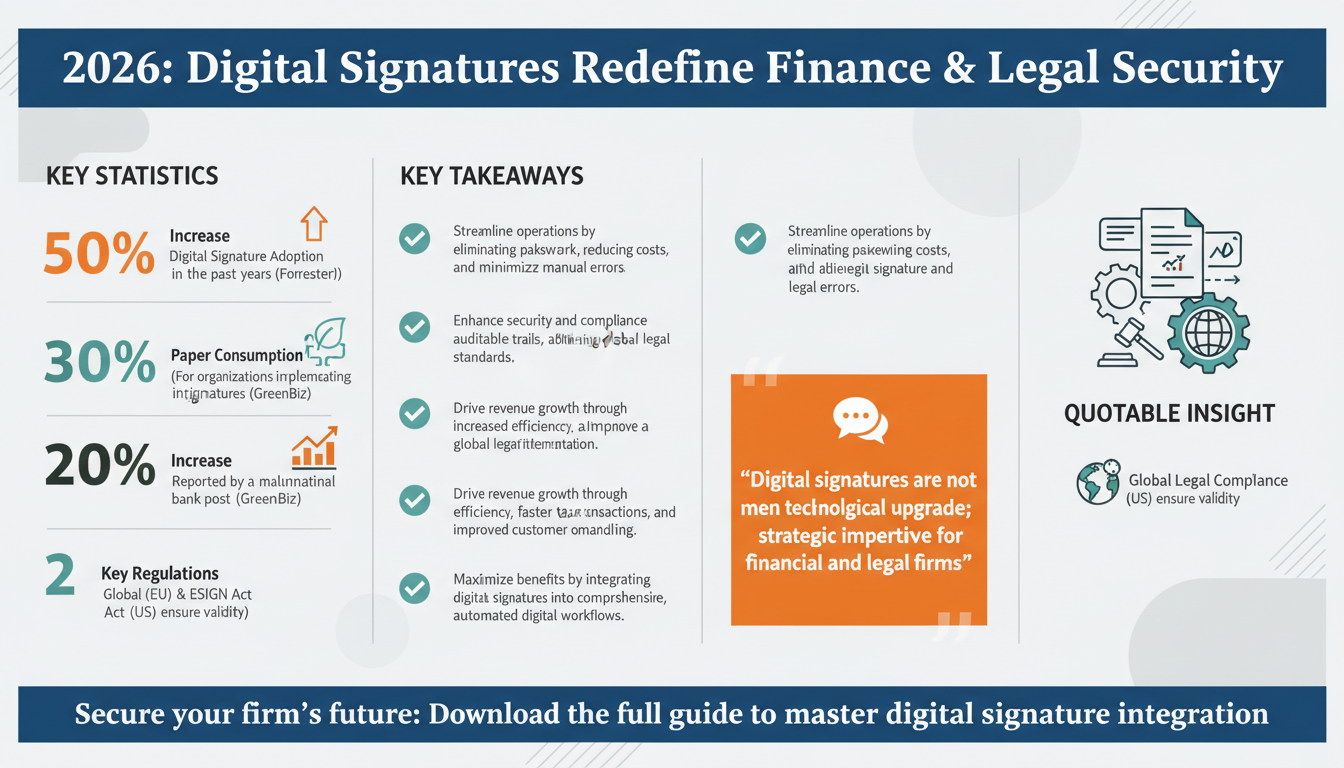
As we advance into 2026, the integration of technology in the financial and legal sectors is not just a trend but a necessity. Digital signatures have become a pivotal element in this digital transformation, offering an efficient, secure, and legally binding method for document authentication. The rise in digital signature adoption is staggering, with a Forrester report indicating a 50% increase over the past two years, highlighting their growing indispensability.

Financial institutions benefit significantly from digital signatures as they eliminate the cumbersome need for physical paperwork, thereby reducing costs and minimizing errors associated with manual document handling. Legal firms, on the other hand, gain from the enhanced security and compliance features of digital signatures, which provide a detailed, auditable trail of document handling and approvals. This transition is not merely a technological upgrade but a strategic imperative, allowing these sectors to meet the demands of an increasingly digital world efficiently.
The environmental impact of reducing paper usage by adopting digital signatures cannot be understated. A study by GreenBiz found that organizations implementing digital signatures witnessed a 30% reduction in paper consumption. This not only aligns with broader sustainability goals but also offers a competitive advantage in markets where eco-consciousness is increasingly valued by consumers and stakeholders alike.
The Economic Implications
Besides environmental benefits, the economic implications of adopting digital signatures are substantial. Firms that transition to digital signature solutions report not only cost savings but also increased revenue opportunities due to enhanced efficiency and faster transaction times. For instance, a large multinational bank reported a 20% increase in customer acquisition rates post-implementation of digital signatures, as the streamlined process provided a smoother and quicker customer onboarding experience.
Pro Tip: Leveraging Digital Workflows
To maximize the benefits of digital signatures, integrate them into a comprehensive digital workflow. This can include automating approval processes, setting up reminders for pending signatures, and using analytics to monitor process efficiency. By doing so, firms can further reduce manual errors and ensure that no steps are overlooked in the document handling process.
Furthermore, digital signatures are instrumental in expediting business processes. For instance, contract approval times have been significantly reduced, allowing businesses to operate more swiftly and efficiently. This efficiency can be particularly advantageous in high-stakes environments where time is of the essence, such as in mergers and acquisitions or legal settlements.
Understanding the Legal Compliance of Digital Signatures
In the financial and legal industries, ensuring compliance with legal standards is paramount. Digital signatures are governed by stringent regulations such as the eIDAS Regulation in the EU and the ESIGN Act in the US, which provide a robust framework to ensure their legal validity and enforceability. These regulations outline the essential requirements for electronic signatures to be recognized as legally binding, including signer authentication, document integrity, and non-repudiation.

Key Compliance Factors
Key factors for compliance include ensuring that the digital signature platform used adheres to industry standards for encryption and data protection. Regular audits and updates to digital signature solutions are advisable to maintain compliance and ensure the highest levels of security. Additionally, firms should ensure that their staff is well-versed in compliance requirements and that they have a clear understanding of how digital signatures fit into larger regulatory frameworks.
Compliance with these regulations is critical for financial and legal firms to avoid disputes and potential legal challenges. According to Gartner, firms that prioritize compliance experience a 40% reduction in legal disputes related to electronic documents. Ensuring compliance not only protects firms from liability but also reinforces trust with clients and partners by demonstrating a commitment to best practices in document management.
Expert Insight: Building Trust through Transparency
To build trust with clients and partners, firms should provide transparency about their use of digital signatures and how they ensure compliance. This can include offering clients access to audit trails and records of document handling, which can help reassure them of the authenticity and integrity of signed documents.
Common pitfalls in compliance include neglecting to verify the identity of signers or failing to maintain a comprehensive audit trail. To address these issues, firms should implement robust identity verification processes and utilize digital signature platforms that automatically log document interactions. This proactive approach can prevent unauthorized access and ensure that document integrity is maintained throughout its lifecycle.
Moreover, digital signatures provide a level of transparency that is invaluable in legal and financial proceedings. By maintaining an immutable record of document interactions, firms can easily demonstrate compliance during audits or legal disputes, thus safeguarding their reputation and operations.
The Security Advantages of Digital Signatures
For firms dealing with sensitive data, security is a primary concern. Digital signatures offer unparalleled security features designed to protect documents from tampering and unauthorized access. They employ advanced cryptographic algorithms to generate a unique digital fingerprint for each document, ensuring that any alterations can be easily detected.

Advanced Security Measures
Advanced security measures include the use of public key infrastructure (PKI) to manage digital certificates and keys, ensuring that only verified users can access and sign documents. This infrastructure provides an added layer of security by encrypting documents and ensuring that they can only be decrypted by authorized parties. Additionally, many digital signature solutions offer multi-factor authentication as an extra safeguard against unauthorized access.
This technology offers a significantly higher level of security compared to traditional paper-based signatures, which are susceptible to forgery and manipulation. A report by Cybersecurity Insider suggests that organizations using digital signatures experience a 70% reduction in document fraud incidents.
Real-World Applications and Success Stories
In addition to fraud prevention, digital signatures facilitate secure document storage and retrieval. By integrating with secure digital document management systems, digital signatures not only bolster security but also enhance operational efficiency, allowing firms to quickly access signed documents when needed without the risk of data breaches.
Real-world applications of this security feature are evident in sectors such as banking and real estate, where precise and secure documentation is critical. For example, banks can securely manage loan documents and real estate agencies can ensure the authenticity and integrity of property contracts. A notable case is a leading bank that reported a 60% decrease in document handling errors and a 50% increase in processing speed after implementing a digital signature solution.
Integrating Digital Signatures with Existing Systems
One of the key advantages of digital signatures is their ability to seamlessly integrate with existing IT infrastructures. Financial and legal firms often operate complex software ecosystems that require solutions capable of enhancing productivity without disrupting operations. Digital signature platforms, such as Zignature, are designed to integrate with popular business tools, including CRM systems, ERP solutions, and document management systems.

Strategies for Successful Integration
To ensure successful integration, firms should conduct thorough system assessments to identify any compatibility issues and select digital signature solutions that offer robust APIs and support for various platforms. Providing comprehensive training to staff on using these new systems is equally important to maximize the benefits of digital signatures. Additionally, firms should consider the scalability of the digital signature solution, ensuring it can grow alongside their business needs.
According to TechRadar, firms that successfully integrate digital signatures with their existing systems report a 35% increase in operational efficiency. This integration allows for automated tracking and management of documents, significantly reducing manual entry errors and the time spent on administrative tasks.
Case Study: Enhancing Workflow Efficiency
Case studies have shown that firms that embrace digital signature integration see marked improvements in their workflow efficiency. For instance, a leading law firm reported a 40% reduction in contract processing times after integrating digital signatures with its existing case management software. This integration not only streamlined operations but also improved client satisfaction through faster service delivery.
Cost Efficiency and ROI of Digital Signatures
The cost efficiency of digital signatures is a compelling factor driving their adoption in the financial and legal sectors. By eliminating the need for physical document handling, firms can significantly curtail expenses related to paper, printing, and storage. A study by Cost Management found that organizations implementing digital signatures experience an average cost reduction of 25% in document management processes.
Calculating Return on Investment
To calculate the return on investment (ROI) for digital signatures, firms should consider both direct and indirect savings. Direct savings include reduced costs for materials and labor, while indirect savings may come from improved efficiency and faster transaction times. By analyzing these factors, firms can better understand the financial benefits of digital signatures and make informed decisions about their implementation.
Furthermore, digital signatures enhance productivity by accelerating document processing times, translating into faster transaction completions and improved client satisfaction. According to Business Insider, firms report a 50% increase in transaction speed after adopting digital signatures.
Expert Insight: Maximizing ROI through Automation
To maximize ROI, firms should focus on automating document workflows and leveraging analytics to track and optimize signature processes. This strategic approach not only ensures cost savings but also positions firms to respond swiftly to market demands, providing a significant competitive edge. Investing in technology that offers predictive analytics can help firms anticipate and mitigate potential process bottlenecks, further enhancing ROI.
In practice, a multinational corporation that implemented digital signatures reported a 30% reduction in overhead costs associated with document handling and a 20% increase in overall operational efficiency, underscoring the financial benefits of this technology.
Overcoming Challenges in Digital Signature Implementation
Despite the clear benefits, implementing digital signatures can present challenges. Common obstacles include resistance to change, technical difficulties, and concerns over data security. Addressing these challenges requires a strategic approach involving clear communication, robust training, and selecting the right technology partner.
Addressing Resistance to Change
Resistance to change can be mitigated by involving stakeholders early in the decision-making process and demonstrating the tangible benefits of digital signatures. This can be achieved through workshops, pilot programs, and showcasing success stories from other organizations. Engaging employees and obtaining their buy-in is critical to overcoming resistance and ensuring a smooth transition.
Technical challenges can be addressed by choosing platforms that offer comprehensive support and integration capabilities. Ensuring that the chosen solution aligns with existing IT infrastructure and business processes is crucial to minimizing disruptions.
Data Security: A Top Priority
Data security concerns are especially relevant in the financial and legal sectors. To alleviate these, firms should implement stringent security protocols and ensure compliance with relevant regulations. A Data Security review emphasizes the importance of regular security audits and updates to safeguard digital signature systems. Additionally, employing end-to-end encryption and regularly updating security measures can help mitigate potential risks.
A case in point is a financial services firm that successfully overcame initial resistance from its legal department by conducting workshops and providing detailed demonstrations of the benefits and security features of digital signatures. This approach not only fostered acceptance but also facilitated a smoother implementation process.
Future Trends and Innovations in Digital Signatures
The future of digital signatures is poised for exciting developments, with emerging technologies like blockchain and artificial intelligence set to revolutionize their application. In 2026, these technologies are expected to enhance the security and functionality of digital signatures significantly.
Blockchain: Enhancing Security and Transparency
Blockchain technology, for example, offers a decentralized method for verifying digital signatures, providing an additional layer of security. According to Blockchain Insider, blockchain-based signatures can reduce fraud by 80% compared to traditional methods. By leveraging the immutable nature of blockchain, firms can ensure that documents remain tamper-proof and verifiable over time.
Artificial Intelligence: Automating Verification
Artificial intelligence, meanwhile, can automate the verification process, reducing the time and resources needed for signature validation. This automation enhances efficiency and allows firms to focus on core business activities. Firms that adopt these technologies will lead the vanguard of digital transformation, setting new standards for security and efficiency in document management.
Moreover, the integration of machine learning algorithms with digital signature platforms promises to predict and identify potential security breaches, further safeguarding sensitive documents.
FAQ: Common Questions About Digital Signatures
What is the difference between digital and electronic signatures?
Digital signatures are a type of electronic signature that utilize cryptographic methods to ensure document integrity and authenticity, offering a higher level of security compared to standard electronic signatures.
Are digital signatures legally binding?
Yes, digital signatures are legally binding in many jurisdictions, including under the ESIGN Act in the US and the eIDAS Regulation in the EU, provided they meet specific regulatory requirements.
How do digital signatures enhance security?
Digital signatures enhance security by using encryption to create a unique digital fingerprint for each document, ensuring any alterations can be detected.
Can digital signatures be used for all types of documents?
Yes, digital signatures can be used for a wide range of documents, from contracts and agreements to internal memos and financial statements, as long as the document is in a digital format.
Conclusion: Embracing the Future of Digital Signatures
As financial and legal firms navigate the complexities of 2026, digital signatures emerge as an indispensable tool for streamlining operations, ensuring compliance, and enhancing security. By understanding the benefits and challenges of digital signature implementation, these firms can position themselves for success in a digital-first world.
Expanding Digital Horizons
To further enhance your firm's digital transformation journey, consider integrating complementary tools like Apparatuz for workflow automation or Schedly for managing appointments and schedules. Additionally, explore Supportly for robust customer support solutions and Zatisfied for managing customer feedback and satisfaction.
By leveraging these technologies alongside digital signatures, firms can achieve new levels of efficiency, security, and client satisfaction, ensuring they remain competitive in an ever-evolving market.