
In today’s increasingly digital business landscape, electronic signatures (e-signatures) have emerged as a vital tool for small businesses. They offer a faster, more efficient way to manage agreements, reduce paperwork, and save costs. However, adopting e-signatures is not just about convenience—it’s about ensuring compliance. Adhering to the legal and regulatory frameworks governing e-signatures is essential to avoid legal disputes, maintain security, and build trust with clients and stakeholders.
For small businesses, the challenge lies in navigating a patchwork of laws and standards that vary by region, industry, and even transaction type. This guide breaks down the complexities of e-signature compliance, offering actionable insights to help you implement secure, legally binding e-signature workflows. Whether you’re a business owner, legal advisor, or operations manager, this comprehensive resource will equip you with the knowledge to make compliance a cornerstone of your digital transformation strategy.
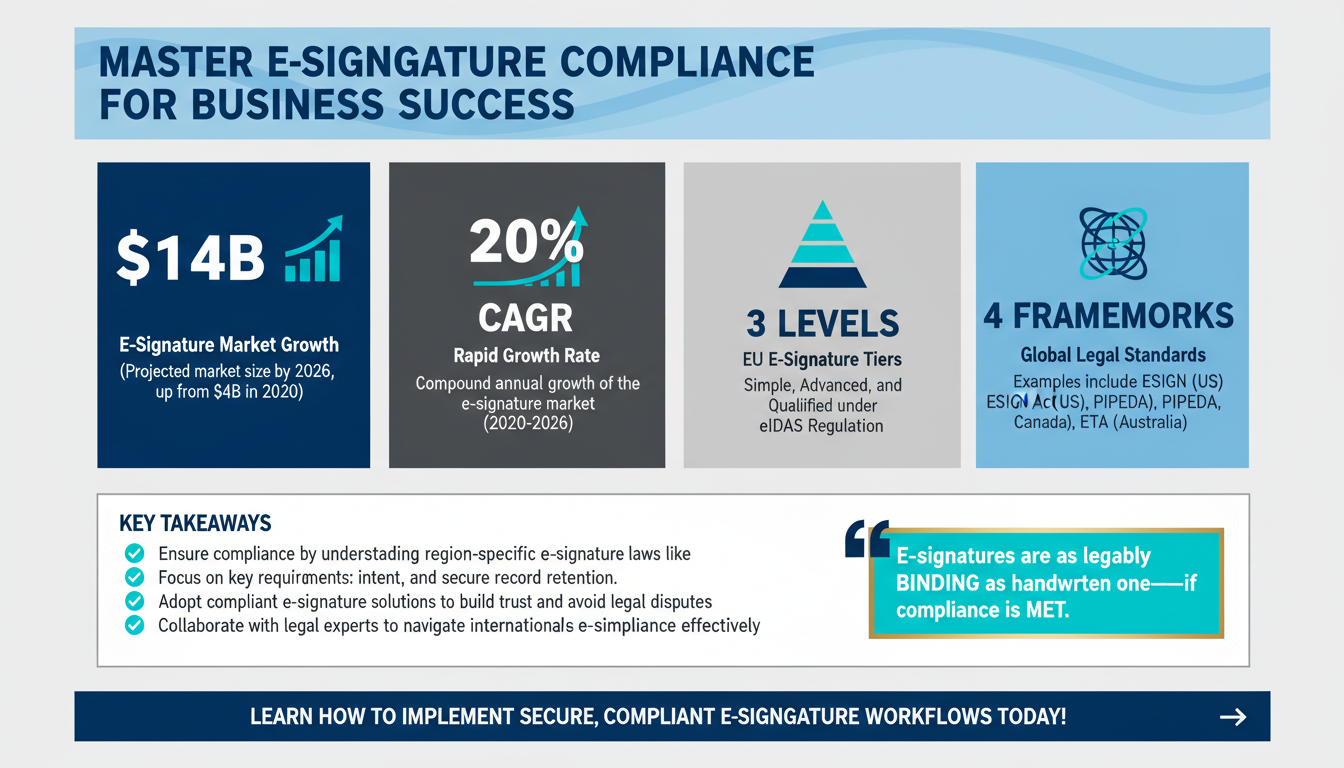
The global adoption of e-signatures is accelerating. According to Statista, the e-signature market is projected to grow from $4 billion in 2020 to $14 billion by 2026, reflecting a compound annual growth rate (CAGR) of over 20%. As demand surges, so do compliance challenges. Let’s dive into the key legal frameworks, common pitfalls, industry-specific considerations, and practical steps for adopting compliant e-signature solutions.
Understanding the Legal Framework for E-Signatures
The legality of e-signatures is underpinned by a variety of laws worldwide, each with its own stipulations for validity and enforceability. In the United States, the Electronic Signatures in Global and National Commerce Act (ESIGN Act) and the Uniform Electronic Transactions Act (UETA) serve as the primary legal frameworks. These laws establish that e-signatures are as legally binding as traditional handwritten signatures, provided certain conditions are met, such as the signer’s intent and consent to use an electronic process.

Legal Frameworks Across Regions
In the European Union, the eIDAS Regulation (Electronic Identification, Authentication, and Trust Services) governs e-signatures. This legislation defines three levels of e-signatures: simple electronic signatures (SES), advanced electronic signatures (AES), and qualified electronic signatures (QES). Only QES, which requires a higher level of identity verification, holds the same legal weight as handwritten signatures across all EU member states.
Canada’s Personal Information Protection and Electronic Documents Act (PIPEDA) outlines the legal requirements for electronic agreements, emphasizing privacy and the secure storage of documents. Meanwhile, Australia adheres to the Electronic Transactions Act (ETA), which explicitly recognizes e-signatures as legally enforceable, provided certain conditions like consent and reliable authentication are met.
Key Compliance Requirements
Regardless of the region, compliance with e-signature laws typically revolves around the following requirements:
- Intent to sign: The signer must demonstrate a clear intention to sign electronically, such as by clicking a confirmation button or using a stylus.
- Consent: All parties must agree to use electronic signatures instead of physical ones.
- Record retention: Signed documents must be securely stored and easily accessible for legal, regulatory, or business purposes.
Pro Tip: International Compliance
Familiarize yourself with the specific legal frameworks relevant to your business’s geographic and operational scope. For instance, a US-based company with European clients must ensure compliance with both the ESIGN Act and eIDAS standards. Partnering with a legal expert or compliance consultant can facilitate this process.
Common Compliance Pitfalls and How to Avoid Them
While e-signatures offer significant advantages, small businesses often face compliance challenges that can lead to costly consequences. Here are some common pitfalls and strategies to avoid them:
Authentication Challenges
1. Lack of authentication measures: One of the most frequent compliance issues is failing to verify the identity of signers. This can result in disputes over the validity of signed agreements. To mitigate this risk, implement multi-factor authentication (MFA) methods, such as requiring a passcode sent to the signer’s mobile device or using biometric verification like fingerprint or facial recognition.
For example, in a case involving a financial services firm, the lack of proper authentication led to a client disputing a $50,000 transaction. By adopting MFA, the firm not only resolved the issue but also enhanced client trust and reduced future risks.
Storage and Security Risks
2. Improper storage of signed documents: Many businesses fail to store signed agreements securely, leaving them vulnerable to data breaches or accidental loss. To ensure compliance, choose e-signature platforms that provide end-to-end encryption and adhere to data protection regulations such as the General Data Protection Regulation (GDPR) or the Health Insurance Portability and Accountability Act (HIPAA).
Moreover, using cloud-based storage solutions with robust access controls can further enhance security. Regular audits of data storage practices can help businesses identify and rectify vulnerabilities before they escalate into compliance violations.
Jurisdiction-Specific Compliance
3. Overlooking jurisdiction-specific laws: Different regions and industries have unique requirements for e-signatures. For instance, in the EU, certain transactions require a QES with additional security features. Partnering with an e-signature provider that specializes in compliance for your specific market can help navigate these complexities.
Expert Insight: The Importance of Audits
According to a Forrester report, 78% of businesses that experienced legal disputes over e-signatures cited non-compliance with regional laws as a contributing factor. Regular compliance audits—preferably conducted by third-party experts—can help prevent such scenarios and ensure all workflows align with current regulations.
Key Features of Compliant E-Signature Solutions
Not all e-signature platforms are created equal. To ensure compliance, it’s essential to evaluate solutions based on their ability to meet security, legal, and operational requirements. Here are the key features to look for:
Security Features
1. Advanced encryption: Ensure the platform uses robust encryption standards, such as AES-256, to protect sensitive data during both transmission and storage. Encryption safeguards documents from unauthorized access and tampering.
2. Audit trails: A detailed audit trail provides a timestamped record of every action taken during the document signing process, from creation to final signature. This feature helps establish accountability and serves as admissible evidence in legal disputes.
Legal and Operational Alignment
3. Integration with legal frameworks: Opt for platforms that comply with global standards like eIDAS, ESIGN Act, UETA, and PIPEDA, ensuring both domestic and cross-border compliance.
4. Multi-factor authentication: Verifying signer identities through MFA or biometric methods significantly reduces the risk of fraud and unauthorized signings.
5. Scalability: As your business grows, your e-signature needs may become more complex. Choose a solution that can scale to support high transaction volumes and integrate with other business tools like CRM or ERP systems.
Case Study
A healthcare provider needed an e-signature solution to streamline patient consent forms while adhering to HIPAA regulations. By adopting a platform with advanced encryption and audit trails, the provider reduced paperwork errors by 35% and improved patient satisfaction by 20%. This highlights the importance of selecting a solution tailored to industry-specific compliance requirements.
Industry-Specific Compliance Considerations
Compliance requirements vary significantly across industries. Understanding and addressing these nuances is critical for selecting the right e-signature solution. Here are some key considerations by sector:

Healthcare
The healthcare industry must comply with HIPAA, which requires stringent data protection measures. E-signature platforms used in this sector should offer secure, encrypted storage and granular access controls to protect patient data.
Finance
Financial institutions must adhere to anti-money laundering (AML) and know-your-customer (KYC) regulations. This means e-signature solutions must support identity verification and audit trails to ensure the authenticity of transactions.
Legal
Law firms need e-signatures that meet evidentiary requirements. Features like timestamping, tamper-proof seals, and detailed audit logs are essential for presenting signed documents in court.
Real Estate
Real estate transactions often involve multiple parties and complex legal documents. Compliance requires ensuring that e-signatures meet local property laws and that documents include clear audit trails and real-time updates.
Practical Tip
Consult industry-specific compliance guidelines and collaborate with legal professionals to ensure your e-signature solution meets all relevant standards. Many providers offer customizable features tailored to specific industries.
Steps to Implementing a Compliant E-Signature Workflow
Implementing a compliant e-signature workflow requires careful planning and execution. Follow these steps to ensure your processes align with legal and regulatory standards:
Step-by-Step Checklist
Step 1: Conduct a compliance assessment: Evaluate your current workflows to identify gaps. Consult legal and compliance experts to understand the specific requirements for your industry and region.
Step 2: Choose the right solution: Select an e-signature platform with features that support compliance, such as encryption, audit trails, and advanced authentication methods.
Step 3: Train your team: Educate employees about the importance of compliance and provide hands-on training for using the e-signature platform. Ensure they understand the legal implications of non-compliance.
Step 4: Monitor and iterate: Regularly review your e-signature workflows to ensure they remain compliant with evolving regulations. Use analytics and reporting tools to identify areas for improvement.
FAQs About E-Signature Compliance
1. Are e-signatures legally binding worldwide?
Yes, but the requirements vary by country. Ensure your solution adheres to local laws like eIDAS (EU), ESIGN Act (US), or PIPEDA (Canada).
2. How do I verify the identity of signers?
Use multi-factor authentication, biometrics, or government-issued ID verification to ensure authenticity.
3. What happens if I fail to comply with e-signature laws?
Non-compliance can lead to invalid contracts, regulatory fines, or legal disputes. Regular audits and compliant solutions help mitigate risks.
Conclusion
E-signatures are a powerful tool for small businesses, but compliance is non-negotiable. By understanding regulatory frameworks, selecting the right solutions, and implementing secure workflows, your business can confidently leverage e-signatures to streamline operations and build trust. Ready to get started? Explore our pricing plans or contact us for tailored guidance.