
As businesses navigate through an increasingly digital world, the necessity for secure and efficient methods of managing vendor contracts has never been more critical. With the digital transformation accelerating, digital signatures have emerged as a key facilitator of secure and compliant transactions. By 2026, they are not just a technological choice but a strategic imperative for businesses aiming to streamline operations and enhance security. This comprehensive guide explores the ways businesses can harness digital signatures to ensure their vendor contracts are both secure and compliant, offering insights into current trends, best practices, and actionable strategies for implementation.
The Rise of Digital Signatures in Business Transactions
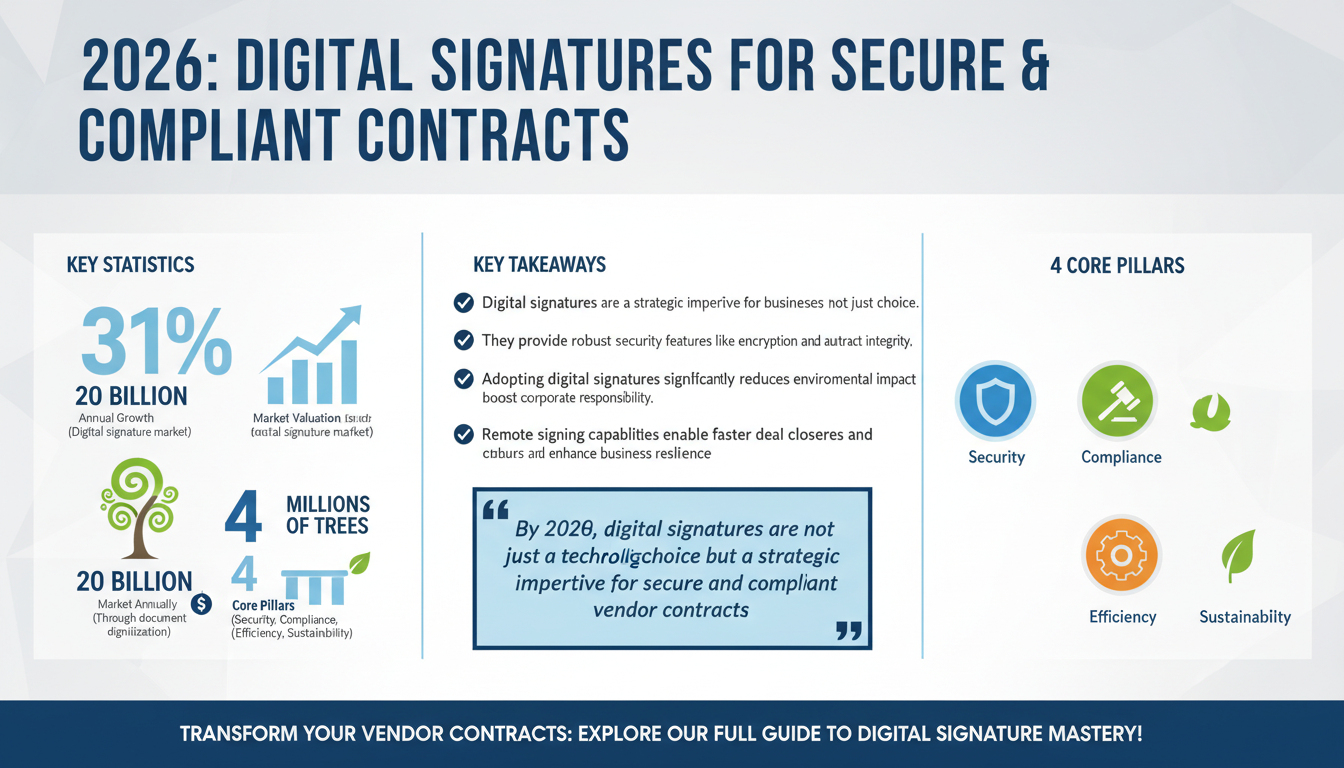
The digital signature market is on a significant upward trajectory, with projections indicating a 31% annual growth, reaching a valuation of $20 billion by 2026. This surge is primarily driven by the growing need for secure, efficient, and legally compliant transaction processes. The adoption of digital signatures is not just a trend but a reflection of a broader shift towards digital transformation across industries.

Digital signatures provide a robust layer of security with features such as encryption and audit trails, crucial for maintaining the integrity and authenticity of vendor contracts. Unlike traditional paper-based methods, which are prone to delays, forgery, and loss, digital signatures offer a streamlined, secure alternative that aligns with modern business needs.
Environmental Impact and Corporate Responsibility
Furthermore, the environmental benefits of reducing paper consumption resonate with corporate sustainability goals, making digital signatures an attractive option for eco-conscious organizations. By transitioning to digital signatures, companies not only cut down on the physical resources required for printing and storing contracts but also reduce their carbon footprint. This aligns with global sustainability targets and demonstrates a commitment to environmental responsibility.
For example, a study by the Environmental Paper Network highlighted that the digitalization of document processes could save millions of trees annually. Businesses that adopt digital signatures as part of their sustainability initiatives can use these statistics to enhance their brand image, appealing to environmentally conscious consumers and investors.
Convenience and Accessibility
The convenience factor is equally compelling; digital signatures enable contracts to be signed remotely, facilitating faster deal closures and strengthening vendor relationships. This capability is particularly beneficial for companies with geographically dispersed teams or international partners. Remote signing eliminates the need for physical travel or mailing, saving time and resources.
Moreover, in a post-pandemic world where remote work has become commonplace, the ability to execute contracts without physical presence is invaluable. Companies that leverage this flexibility can maintain operational continuity even in challenging circumstances, ensuring business resilience.
As companies increasingly recognize these advantages, understanding the transformative role of digital signatures in vendor contract management becomes essential. They are not only tools for efficiency but also critical components in the broader strategy of digital resilience and competitiveness.
Understanding Compliance in Vendor Contracts
Compliance remains a cornerstone of effective vendor contract management, ensuring agreements adhere to legal and regulatory standards. As we move into 2026, the compliance landscape is more intricate than ever, shaped by global regulations such as the General Data Protection Regulation (GDPR), the Electronic Identification, Authentication and Trust Services (eIDAS) regulation, and the California Consumer Privacy Act (CCPA). These frameworks impose stringent requirements on data protection and electronic transactions, necessitating robust solutions for businesses operating across borders.

The Role of Digital Signatures in Compliance
Digital signatures play a crucial role in achieving compliance by providing an auditable trail that proves authenticity and consent. This capability is especially important in highly regulated industries such as finance and healthcare, where compliance failures can lead to severe penalties. The ability to generate tamper-proof records that align with these regulations not only enhances legal standing but also builds trust with vendors and stakeholders.
For instance, in the healthcare industry, where patient privacy is paramount, digital signatures ensure that consent forms and medical records are handled according to HIPAA standards. By using digital signatures, healthcare providers can prevent unauthorized access and maintain comprehensive records of consent, thus protecting patient data.
Choosing the Right Digital Signature Platform
To ensure compliance, businesses must select digital signature platforms that offer essential features like identity verification, secure storage, and detailed audit logs. These features not only fortify a company's legal defenses but also demonstrate a commitment to best practices in data security and vendor relationship management.
When evaluating platforms, businesses should conduct thorough due diligence, considering factors such as the provider's compliance with international standards, their track record in security incidents, and customer testimonials. Additionally, involving legal teams in the selection process can help ensure that all regulatory requirements are met.
By integrating digital signatures with compliance strategies, organizations can navigate the complex regulatory environment with confidence, safeguarding their operations from legal risks and fostering stronger stakeholder relationships.
Security Features of Digital Signatures
Security is the linchpin of digital transactions, and digital signatures are designed to provide robust protection against a myriad of threats. In 2026, the security features of digital signatures have advanced significantly, offering enhanced safeguards against unauthorized access and data breaches.

Advanced Encryption and Digital Certificates
Among the key security features are encryption, which ensures that data is accessible only to authorized parties, and digital certificates, which verify the signer's identity. These features are critical in preventing fraud and maintaining the integrity of vendor contracts. Encryption acts as a barrier to unauthorized access, while digital certificates serve as a digital ID card, verifying the identity of the parties involved in the transaction.
For example, a company dealing with sensitive intellectual property can use digital signatures to encrypt documents, ensuring that only authorized signatories can access the content. This prevents corporate espionage and unauthorized sharing of proprietary information.
Non-Repudiation and Audit Trails
Another critical security feature is non-repudiation, which ensures that the signer cannot deny their involvement in the transaction. This is achieved through cryptographic algorithms that create a unique signature for each document, providing a digital fingerprint that can be verified at any time. Audit trails also play a crucial role, offering a transparent record of all activities related to a document, from creation to signing and beyond.
By employing these advanced security measures, businesses can protect sensitive information and uphold the trust of their vendors and partners. Moreover, as cyber threats continue to evolve, maintaining a high level of security through digital signatures is not just advisable but essential for any modern business.
Pro Tip: Regularly update your digital signature platform to leverage the latest security features and protect against emerging cyber threats. Collaborate with your IT department to ensure that all digital transactions are monitored for abnormal activities.
Implementing Digital Signatures: A Step-by-Step Guide
Implementing digital signatures in your organization involves a strategic approach to ensure seamless integration into existing workflows. Here is a step-by-step guide to help you navigate this process:

- Identify Business Needs: Begin by assessing your current contract management processes and identifying areas where digital signatures can add value. Consider factors such as volume of contracts, types of agreements, and compliance requirements.
- Select the Right Platform: Choosing a digital signature solution that aligns with your business needs is crucial. Look for platforms that offer robust security features, compliance with relevant regulations, and integration capabilities with your existing systems.
- Establish Policies and Procedures: Develop clear policies and procedures for using digital signatures. This includes defining roles and responsibilities, establishing guidelines for document handling, and setting protocols for signature verification and storage.
- Train Staff: Comprehensive training is essential to ensure successful adoption of digital signatures. Provide training sessions and resources to familiarize staff with the new technology and its benefits.
- Integrate with Existing Systems: Seamless integration with existing systems such as CRM and document management solutions is key to maximizing efficiency. Work with your IT team or solution provider to ensure a smooth integration process.
- Test and Refine: Conduct a pilot program to test the implementation on a small scale. This will help identify potential issues and allow you to refine processes before a full-scale rollout.
- Monitor and Improve: Continuous monitoring and feedback loops are crucial for ongoing improvement. Regularly review the effectiveness of your digital signature processes and make adjustments as necessary to address emerging needs or challenges.
Checklist for Successful Implementation
- Conduct a comprehensive needs assessment
- Evaluate and select a compliant digital signature platform
- Develop and document digital signature policies
- Provide comprehensive staff training and resources
- Integrate seamlessly with existing business systems
- Launch a pilot program to test and refine processes
- Establish continuous monitoring and improvement practices
By following these steps, organizations can effectively transition to a digital signature system that enhances contract management efficiency and security, ensuring they stay ahead in the competitive business landscape.
Case Studies: Success Stories in Vendor Contract Management
Real-world examples highlight the transformative impact of digital signatures on vendor contract management. Consider the case of a mid-sized financial services firm that reduced contract processing time by 50% using digital signatures. This improvement not only enhanced operational efficiency but also strengthened vendor relationships by accelerating deal closures.
Healthcare Industry: A Compliance Success Story
In another instance, a healthcare organization achieved compliance with stringent data protection regulations by adopting a digital signature solution. This enabled them to secure sensitive patient data while maintaining seamless contract execution processes. The organization reported a 40% reduction in compliance-related errors, leading to improved patient trust and reduced legal risks.
Manufacturing Sector: Streamlining Procurement
A global manufacturing company also saw significant benefits by integrating digital signatures into their vendor management system. By doing so, they decreased their dependency on physical paperwork, reduced errors, and improved auditability, resulting in a more streamlined and transparent procurement process. This led to a 30% reduction in procurement cycle times and cost savings estimated at $200,000 annually.
These case studies underscore the potential of digital signatures to revolutionize contract management, providing valuable insights for other businesses considering this transition. They demonstrate that with the right strategy and implementation, digital signatures can drive efficiency, enhance compliance, and foster stronger vendor relationships.
Common Mistakes in Digital Signature Implementation
While the advantages of digital signatures are clear, businesses often encounter pitfalls during implementation. One common mistake is choosing a solution that lacks necessary compliance features, which can lead to legal vulnerabilities and compliance failures.
Addressing Training Gaps
Another critical issue is inadequate staff training. Without proper training, employees may misuse or underutilize the technology, negating the potential benefits. Comprehensive training programs are essential to ensure all team members can effectively use digital signatures. Training should cover not only the technical aspects but also the legal implications and best practices for secure document handling.
Integration Challenges
Failing to integrate digital signatures with existing systems can also hinder adoption and reduce efficiency. Integration is key to maximizing the benefits of digital signature solutions, allowing for seamless workflows and improved user experience. Businesses should collaborate closely with their IT departments to ensure that digital signature solutions are compatible with other enterprise systems.
Additionally, overlooking the importance of user experience can lead to resistance from employees and vendors. It is important to select a user-friendly platform that simplifies the signing process and facilitates easy adoption.
By being aware of these common mistakes, businesses can take proactive steps to avoid them, ensuring a successful digital signature implementation that delivers maximum value.
Future Trends in Digital Signatures and Vendor Contracts
As technology continues to evolve, digital signatures are poised to become even more sophisticated. One emerging trend is the integration of blockchain technology, which offers enhanced security and transparency for digital transactions. Blockchain can provide a decentralized and immutable ledger, adding an additional layer of trust and verification to digital signatures.
Artificial Intelligence in Contract Management
Artificial intelligence (AI) is also set to play a significant role in automating and optimizing contract management processes. AI-powered analytics can provide insights into contract performance, identify potential risks, and suggest improvements, making the entire process more efficient and effective. By leveraging AI, businesses can gain predictive insights, allowing them to proactively address potential issues before they escalate.
Regulatory Developments
Furthermore, the increasing adoption of digital signatures across industries is likely to drive further regulatory developments, ensuring that these solutions remain compliant with evolving legal standards. As more businesses embrace digital transformation, the regulatory landscape will continue to adapt to accommodate new technologies and practices.
These trends indicate a promising future for digital signatures, with the potential to further enhance vendor contract management and business operations. Staying informed about these developments will be crucial for businesses aiming to leverage digital signatures effectively in the coming years.
FAQs: Addressing Common Concerns
What are the legal requirements for digital signatures?
Digital signatures must comply with specific regulations such as eIDAS in the EU or the ESIGN Act in the US. It's important to choose a solution that adheres to these standards to ensure legal validity.
How do digital signatures enhance security?
They use encryption and digital certificates to ensure that only authorized parties can access the signed documents, preventing unauthorized alterations and ensuring document integrity.
Can digital signatures be used for international contracts?
Yes, most digital signature solutions are designed to comply with international regulations, making them suitable for cross-border agreements. However, it's important to verify compliance with the specific legal requirements of each jurisdiction involved.
What industries benefit most from digital signatures?
Industries with high regulatory requirements, such as finance, healthcare, and legal sectors, benefit significantly from the security and compliance offered by digital signatures. However, any industry that values efficiency and security can benefit from adopting digital signatures.
How can I ensure my digital signature solution is compliant?
Conduct thorough research and choose a solution that offers features like audit trails, identity verification, and complies with relevant laws and standards. Regularly review and update your compliance practices to align with evolving regulations.
Conclusion: Taking the Next Step with Digital Signatures
As businesses continue to navigate the complexities of modern contract management, digital signatures offer a powerful tool for enhancing security, compliance, and efficiency. By leveraging the insights and strategies outlined in this guide, organizations can position themselves for success in 2026 and beyond.
For businesses looking to further streamline their operations, consider integrating digital signatures with other platforms such as Apparatuz for workflow automation, or Schedly for appointment management. These complementary tools can enhance your digital transformation efforts and provide a competitive edge in today's digital economy.
Explore our guide on enhancing remote work security with electronic signatures for more insights on digital solutions that can propel your business forward. Embrace the future of contract management with confidence, knowing that digital signatures are not just a technological advancement but a strategic advantage.