
Introduction: The Cost of Errors in Business Workflows
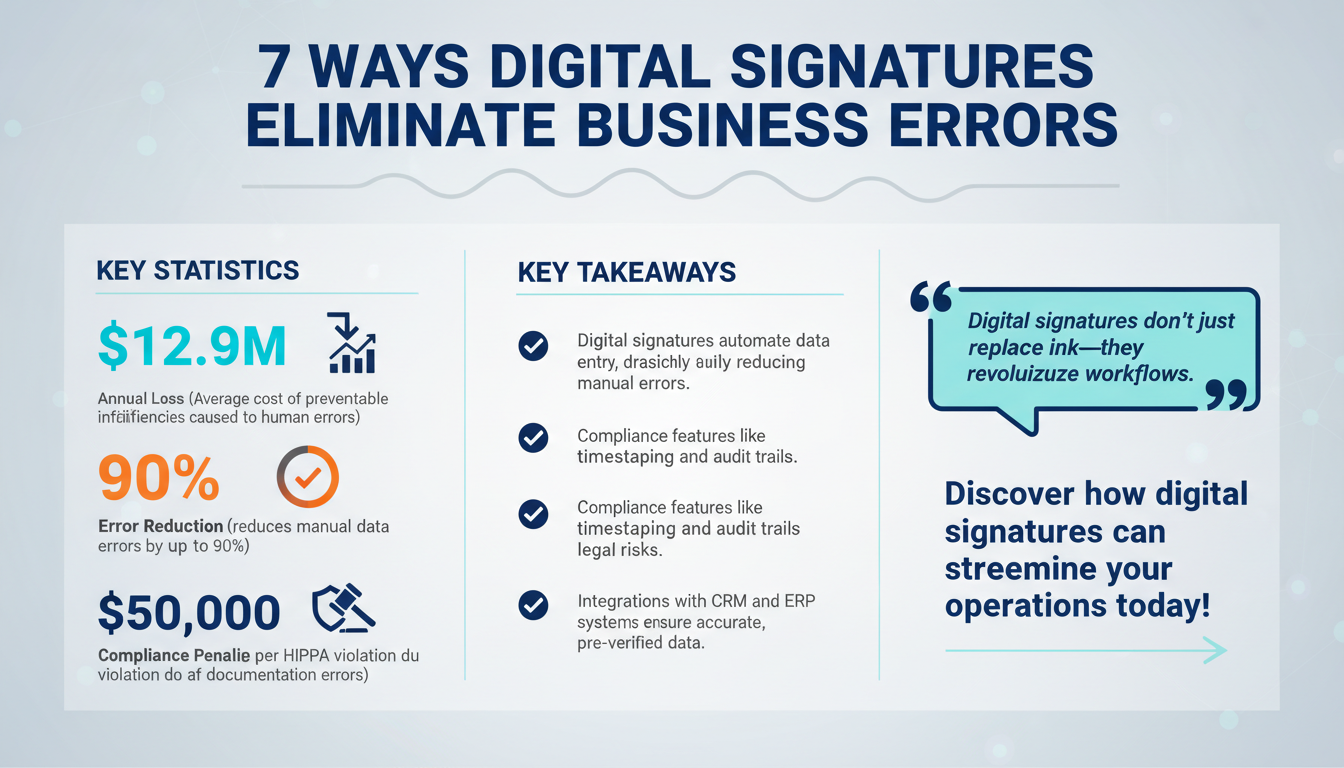
Human errors in critical business workflows are more than just minor inconveniences—they can lead to significant financial losses, compliance risks, and operational inefficiencies. In industries where accuracy and timeliness are critical, such as healthcare, finance, and legal services, even a single mistake can cascade into larger problems, including lost revenue, damaged reputation, or regulatory penalties. According to a study by Deloitte, companies lose an average of $12.9 million annually due to preventable process inefficiencies, many of which stem from human errors.
In this high-stakes environment, digital signatures are emerging as a powerful tool to mitigate risks. They don’t just replace traditional ink signatures; they revolutionize how businesses handle approvals, ensuring accuracy, compliance, and security in every step of the workflow. By automating processes and providing tamper-proof authentication mechanisms, digital signatures significantly reduce the likelihood of manual errors.
This article explores seven specific ways digital signatures can prevent human errors, offering actionable insights and real-world applications that businesses of all sizes can adopt to streamline their workflows.

1. Eliminating Manual Data Entry Errors
Manual data entry is one of the most error-prone tasks in any business process. Mistakes like transposing numbers, entering incorrect client details, or leaving mandatory fields blank can create a domino effect of issues. For example, incorrect data in financial documents can result in failed transactions, while incomplete forms in healthcare settings can delay patient treatments.
Digital signature platforms address this challenge by integrating seamlessly with existing business systems, such as Customer Relationship Management (CRM) tools or Enterprise Resource Planning (ERP) software. These integrations allow systems to auto-populate forms with accurate, pre-verified data from centralized databases, reducing the chances of human error. Moreover, many digital signature solutions include built-in validation checks to ensure that all mandatory fields are completed before submission.
For instance, a financial institution using digital signatures can pull client details directly from their CRM, ensuring that account numbers, names, and addresses are accurate. This eliminates the need for manual data entry and drastically reduces the possibility of errors. According to a Forrester report, automating data entry processes can reduce errors by up to 90%, saving organizations both time and money.
Key Takeaways:
- Auto-population of form fields ensures accuracy and consistency.
- Validation checks prevent skipped mandatory fields.
- Significantly reduces time spent on correcting errors.

2. Ensuring Compliance with Legal and Regulatory Standards
Regulatory compliance is a non-negotiable aspect of modern business, particularly in industries like healthcare, financial services, and legal sectors. Errors in compliance-related documentation can lead to severe consequences, including hefty fines, legal action, and reputational damage. For example, a healthcare provider failing to comply with HIPAA regulations could face fines ranging from $100 to $50,000 per violation.
Digital signatures are designed to meet stringent legal and regulatory requirements. They comply with frameworks like the Electronic Signatures in Global and National Commerce (ESIGN) Act in the U.S., eIDAS in the EU, and HIPAA in healthcare. By incorporating features such as timestamping, identity verification, and tamper-proof audit trails, digital signatures ensure that documents are secure, authentic, and legally binding.
For example, healthcare providers can use digital signatures to securely sign patient records, ensuring compliance with HIPAA regulations. These systems also provide an audit trail that can be presented during regulatory reviews or legal disputes. According to Deloitte Insights, automated compliance tools, including digital signatures, reduce audit-related errors by 37%, helping businesses avoid costly penalties.
Key Takeaways:
- Digital signatures enforce legal and regulatory checks automatically.
- Tamper-proof audit trails enhance document integrity.
- Reduces risks of fines and legal disputes related to non-compliance.

3. Reducing Miscommunication in Multi-Stakeholder Workflows
In workflows that involve multiple stakeholders, miscommunication is a common challenge. Whether it’s confusion over who needs to approve a document next or stakeholders working on outdated versions of a file, these issues can delay projects and create unnecessary friction. Traditional methods like email chains or physical document routing exacerbate these problems by making it difficult to track progress and ensure accountability.
Digital signature platforms solve these issues by centralizing workflows and providing real-time updates. Stakeholders can track the status of a document, know exactly who has signed it, and receive notifications when it’s their turn to take action. This not only eliminates confusion but also ensures that everyone is working on the most up-to-date version of the document.
For example, a real estate firm managing property contracts can use digital signatures to ensure that all parties sign in the correct order, with automated notifications sent to each party as required. According to a Gartner report, businesses adopting centralized digital workflows experience up to a 60% reduction in delays caused by miscommunication.
Key Takeaways:
- Real-time updates keep all stakeholders informed and aligned.
- Centralized platforms prevent version control issues.
- Improves accountability and speeds up decision-making processes.

4. Mitigating Risks of Lost or Misplaced Documents
Traditional paper-based workflows are inherently risky due to the possibility of losing or misplacing documents. A lost contract or invoice can lead to project delays, client dissatisfaction, or even legal complications. According to Statista, 7% of physical documents are lost annually, costing businesses an average of $220 per document in recovery and rework expenses.
Digital signature systems eliminate this risk by storing documents securely in the cloud. These platforms provide centralized repositories that are easily accessible to authorized users, ensuring that important files are never misplaced. Advanced encryption technologies also protect documents from unauthorized access, safeguarding sensitive information.
For example, a law firm using digital signatures can securely store contracts and retrieve them instantly whenever needed, avoiding the chaos of misplaced legal documents. This not only enhances efficiency but also provides peace of mind for both the firm and its clients.
Key Takeaways:
- Secure cloud storage prevents document loss and misplacement.
- Encryption protects sensitive information from unauthorized access.
- Instant access to files improves operational efficiency.

5. Automating Audit Trails for Enhanced Transparency
Audit trails are critical for maintaining transparency and accountability in business processes. However, manually tracking document approvals, edits, and timestamps is labor-intensive and prone to errors. Incomplete or inaccurate audit trails can lead to compliance issues and undermine stakeholder trust.
Digital signature solutions automatically generate detailed audit trails that record every action taken on a document, including when it was signed, by whom, and any changes made. These records are tamper-proof and easily accessible, simplifying both internal reviews and external audits.
For instance, an enterprise preparing for a compliance audit can use digital signatures to present a complete, verifiable history of document approvals. According to McKinsey & Company, automated audit trails reduce the time spent on compliance reporting by 50%, freeing up resources for more strategic tasks.
Key Takeaways:
- Automated audit trails improve governance and accountability.
- Detailed records simplify compliance audits and reporting.
- Enhances trust with clients, partners, and regulators.
6. Preventing Errors in Contract Approvals
Errors in contract approvals, such as missing signatures or overlooked mandatory fields, can delay project timelines and lead to disputes. Traditional approval processes relying on physical documents or scattered email chains are especially vulnerable to these issues.
Digital signature platforms address this by ensuring that contracts are signed in the correct order, with all mandatory fields completed before submission. Automated reminders and progress tracking further reduce the risk of oversight, keeping the approval process on track.
For example, a construction company managing multiple contractors can use digital signatures to ensure that all parties sign off on project specifications before work begins. A report by Construction Dive found that businesses using digital signatures experience 35% fewer contract disputes.
Key Takeaways:
- Ensures mandatory fields are completed before submission.
- Streamlines contract approval processes, reducing delays.
- Minimizes disputes by maintaining clear records of approvals.
7. Enhancing Security to Prevent Fraud and Tampering
Fraud and document tampering are significant risks in traditional workflows, especially when dealing with sensitive information like financial agreements or legal contracts. Traditional methods, such as wet signatures, offer limited protection against forgery or unauthorized alterations.
Digital signatures provide robust security features to mitigate these risks. They use encryption and advanced authentication methods, such as two-factor authentication and biometric verification, to ensure that documents are tamper-proof and accessible only to authorized parties. Additionally, any changes made to a digitally signed document invalidate the signature, providing a clear indication of tampering.
For example, a financial firm handling client investment agreements can use digital signatures to ensure that all documents are secure and unaltered. According to Cybersecurity Insights, businesses adopting secure digital signature solutions reduce fraud-related losses by 28%, making them a cost-effective solution for enhancing security.
Key Takeaways:
- Encryption ensures documents are tamper-proof and secure.
- Advanced authentication methods prevent unauthorized access.
- Reduces risks of fraud and enhances trust in business transactions.
Conclusion: A Smarter, Safer Future with Digital Signatures
In an increasingly digital world, businesses cannot afford to rely on outdated, error-prone processes. From eliminating manual data entry errors to enhancing security and ensuring compliance, digital signatures offer a comprehensive solution for modernizing workflows. Their ability to prevent human errors not only saves time and money but also enhances trust, transparency, and operational efficiency.
As organizations across industries adopt digital signatures, the benefits extend beyond error prevention. They pave the way for faster approvals, better collaboration, and a more agile approach to business operations. By investing in digital signature technology, businesses can future-proof their workflows and stay ahead in a competitive landscape.
To further enhance your digital workflows, explore our sister platforms: Apparatuz for workflow automation, Applicantz for recruitment management, Schedly for scheduling and appointments, Supportly for customer support, and Zatisfied for feedback management. Together, these tools create a comprehensive ecosystem that complements your digital signature strategy.